


Blog

How to Choose the Best Nursing Home Neglect Attorneys in Brooklyn

Best nursing home neglect attorneys in Brooklyn?
Best nursing home neglect attorneys in Brooklyn? Document the resident’s condition and preserve records before they are lost. Neglect means a facility fails to provide care a resident needs; abuse involves intentional harm or exploitation. Either can put a resident’s health and safety at risk. Our experienced attorneys with a track record of winning cases can assess the facts during a Free consultation.
Key Takeaways
- Choosing a Brooklyn nursing home neglect attorney starts with acting quickly, because medical records and witness accounts can disappear before a case is filed.
- Neglect happens when a facility fails to deliver necessary care, while abuse involves deliberate harm or exploitation of a resident.
- Look for attorneys with decades of trial experience, peer recognition such as an AV rating, and a record of substantial verdicts and settlements.
- A strong lawyer will investigate staffing records, injury documentation, and facility history to build the fullest possible claim.
- Our team offers a free consultation, and with Se habla Español service, language is never a barrier to justice for your family.
As an AV-rated New York firm, Silberstein & Miklos, P.C. focuses on evidence behind institutional care decisions. Here is how families can recognize possible neglect or abuse and preserve proof.
What Is the Difference Between Nursing Home Neglect and Abuse Under New York Law?
Neglect is a failure to provide necessary care, such as help with hygiene, nutrition, medication, or movement. Abuse is an act intended to harm, intimidate, or exploit a resident. A case can involve both. The legal label depends on the evidence and circumstances, so record what happened rather than trying to decide the label yourself.
Types of Neglect: Pressure Sores, Malnutrition, Dehydration, and Missed Medications
A pressure sore is skin damage caused by prolonged pressure, often when a person cannot move without help. Malnutrition means a person is not getting enough nutrients; dehydration means the body lacks enough fluids. Missed or incorrectly given medication can signal a breakdown in care. These conditions may have more than one cause, so medical assessment and care records matter.
Abuse Categories: Physical, Sexual, Psychological, and Financial Exploitation
Abuse can include physical force, sexual contact without consent, threats or humiliation, and misuse of a resident’s money or property. Psychological abuse means conduct that causes fear or emotional distress. Tell a medical professional or appropriate authority about suspected harm, and keep a dated record.
Warning Signs Brooklyn Families Should Watch For During Visits
Look for new bruises, unexplained weight loss, poor hygiene, untreated wounds, soiled bedding, or a resident who seems unusually fearful or withdrawn. Ask staff about sudden changes in health, medication, or daily care. One sign alone does not prove neglect. A pattern, a change from the resident’s usual condition, or an explanation that conflicts with records deserves follow-up.
Understaffing as a Documented Cause of Neglect, and How to Prove It
Understaffing can contribute to delayed checks, missed medication, falls, or a lack of help with meals and movement. A family’s observation is a starting point, not proof of staffing levels or fault. Request staffing schedules, shift assignments, care plans, and response-time records. Compare those records with dates and times in your notes so a lawyer or investigator can review possible gaps.
How Do You Preserve Evidence Before It Disappears? A Step-by-Step Playbook
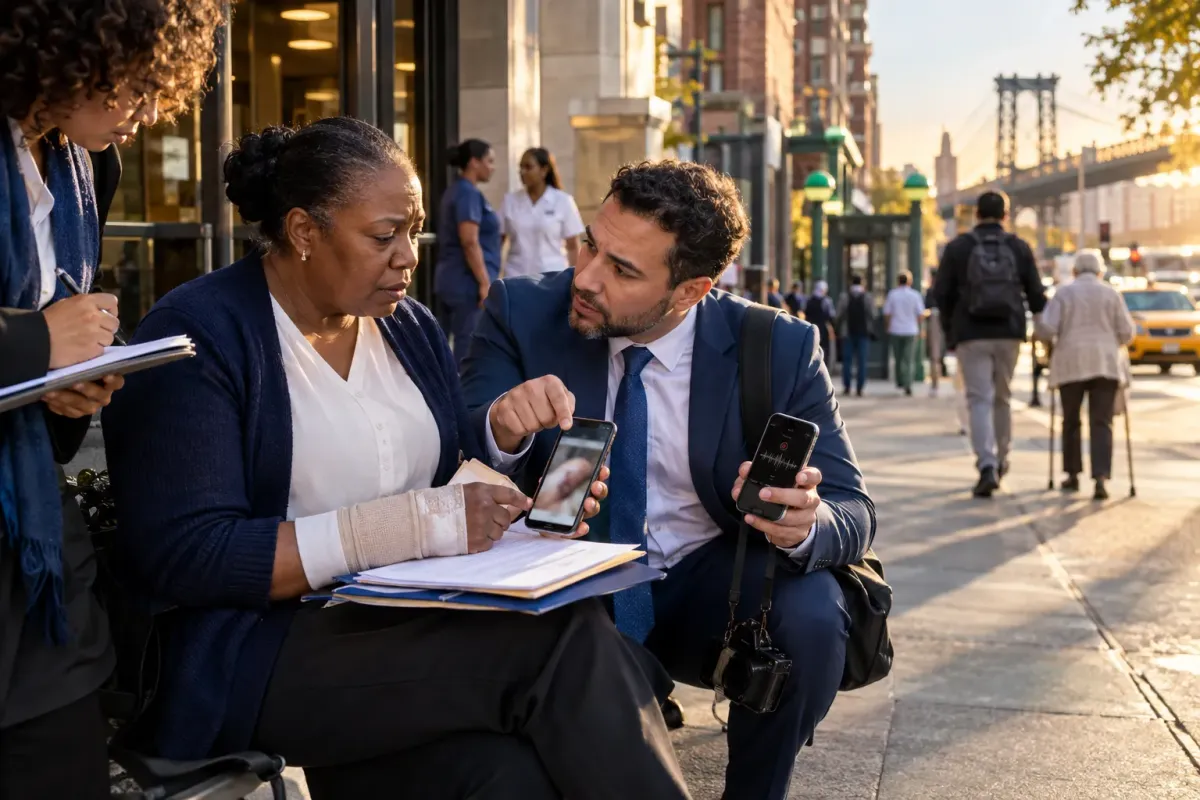
Act promptly, keep communications factual, and save copies outside the facility. Records can show planned care, what staff provided, and when the facility learned of a problem. Do not alter original documents or confront staff in a way that risks the resident’s immediate safety. If the resident needs urgent medical attention, seek care first.
Request Shift Logs, Medication Records, and Incident Reports in Writing This Week
Send the administrator a dated written request for the resident’s care plan, medication administration records, incident reports, and relevant shift or staffing records. Identify the resident and dates at issue. Keep your request and proof of delivery. Access may depend on the resident’s rights, authorization, and applicable rules, so an attorney can advise on a formal records request.
Ask for Shift Video Footage Before the Retention Window Closes
If cameras may have captured an incident or hallway activity, promptly ask the facility in writing to preserve footage for the specific date, time, and location. Video systems can overwrite recordings, and retention periods vary. A request does not guarantee access or preservation. Keep a copy and note the name and role of anyone who responds.
Take Your Own Photos and Notes: Building an Independent Record
With the resident’s consent or proper authority, photograph visible injuries, room conditions, clothing, or equipment. Record the date, time, location, and who was present. Write down the resident’s words as accurately as possible without leading questions. Save discharge papers, messages, bills, and witness names in a secure folder; preserve original files and avoid posting them online.
Why You Cannot Rely on the Facility to Investigate Itself
Notify facility leadership, but preserve an independent record too. An internal review does not replace medical documentation, witness accounts, or an outside investigation. Keep copies of complaints and responses, and note when staff were notified. A New York nursing home abuse and neglect lawyer can review evidence and identify records that need formal preservation.
Filing a Police Report Independently of the Nursing Home
For suspected assault, theft, or immediate danger, contact 911 or the appropriate local police department. A police report creates a separate record; it does not decide whether a civil claim exists. Share what you observed, distinguish firsthand knowledge from what someone told you, and keep the report number and officer’s contact information.
Report to the New York Department of Health and Adult Protective Services
Families can report nursing home concerns to the New York State Department of Health Nursing Home Complaint Hotline at 1-888-201-4563. Adult Protective Services may also be relevant when an adult faces abuse, neglect, or exploitation. Reporting can prompt review or assistance, but it does not replace medical care or evidence preservation. Keep the date, confirmation details, and a copy of your report.
Families seeking counsel can contact Brooklyn Nursing Home Abuse and Neglect Attorneys. The Brooklyn Nursing Home Abuse and Neglect Attorneys can review records and help determine practical next steps.
What Should Adult Protective Services Contact Mean for Your Family. And What If the Report Is Retaliatory?
Adult Protective Services (APS) may contact a family after someone reports concern about an adult’s safety, care, or ability to meet basic needs. Contact alone does not establish wrongdoing by a caregiver. Ask which agency worker is calling and what concern is under review, and request instructions in writing when possible. Keep answers factual; do not guess about events you did not witness.
When APS Reaches Out: Follow the Plan, No Short Cuts
Cooperate with reasonable requests and follow the worker’s safety plan. If you do not understand a question, ask for clarification before answering. Keep notices and a dated record of calls, visits, requests, and actions. Do not hide records, coach the resident, or disregard a safety instruction. Arrange urgent medical care promptly and tell the worker what care was provided.
If Someone Files a Baseless or Retaliatory APS Report Against a Caregiver
A report may feel retaliatory during a dispute with a facility or another family member. Do not respond with threats or confrontations. Preserve messages and documents that show the timeline, then give APS a clear account supported by records. If the allegation could affect custody, access to the resident, or a criminal investigation, speak with a lawyer before making a detailed written statement. A lawyer can help protect your rights without obstructing a legitimate safety review.
When Protective Services and a Neglect Claim Overlap
An APS inquiry and a civil neglect claim serve different purposes. APS assesses safety and services; a civil case seeks legal accountability and, where supported, compensation. Be truthful with each agency, but do not assume one investigation replaces the other. Keep communications and records organized so your lawyer can review them without interfering with the safety assessment.
How Do You Choose Among Brooklyn Nursing Home Neglect Attorneys? A Consultation Checklist
Choose counsel who can explain how the firm evaluates institutional care, investigates records, and prepares a case for court. Ask who will handle your matter, how often you will receive updates, and what the firm needs from your family. Silberstein & Miklos, P.C. offers a Free consultation. Its Brooklyn Nursing Home Abuse and Neglect Attorneys can discuss the facts and possible next steps without guaranteeing an outcome.
Experience Questions: Institutional Negligence Cases, Trials, and Brooklyn Court History
Ask whether the attorney has handled nursing home cases involving missed care, unsafe conditions, medication issues, or failures in supervision. Ask what evidence the team examines and whether the attorney personally prepares cases for trial. Request a clear explanation of the firm’s Brooklyn court experience, rather than relying on broad claims or a single result. Experienced attorneys with a track record of winning cases should explain their process and what they cannot predict.
- Who will lead the investigation and communicate with our family?
- How do you assess facility records, medical records, and witness accounts?
- What steps do you take if the facility disputes the events?
- How are case strategy and major decisions explained to clients?
Contingency Fees Versus Hourly Billing: What No-Fee-Unless-You-Win Really Means
Ask for the fee agreement in writing. Review how the attorney’s fee is calculated, which case expenses may arise, and who pays those expenses if there is no recovery. “No fee unless you win” usually refers to the attorney’s fee, not necessarily every case cost. Confirm the details before signing; the written agreement controls.
| Fee arrangement | What to ask | What to confirm in writing |
|---|---|---|
| Contingency fee | What percentage applies, and when is it calculated? | Fee terms, case expenses, and responsibility if there is no recovery |
| Hourly billing | What hourly rates apply, and how often will bills arrive? | Rates, retainer, billing increments, and expense policy |
Case Evaluation Intake Checklist: What a Strong Attorney Asks You
A focused intake connects the resident’s condition to the care the facility provided. Gather the resident’s name and facility details, dates of relevant events, medical providers, known witnesses, and written complaints or responses. Note health changes and what staff said. If you do not have records yet, say so; do not delay a consultation while trying to obtain every document.
- What changed in the resident’s health, mobility, eating, or behavior?
- When did the family first raise concerns, and with whom?
- Which records, photographs, messages, or witness names are available?
- Has the resident received medical care or been moved to another facility?
How a Brooklyn Nursing Home Neglect Attorney Builds Your Case
Counsel reviews medical and facility records, identifies gaps between the care plan and care delivered, and evaluates whether expert review is needed. The attorney may seek additional records, interview witnesses, and assess the facility’s response to concerns. Case strategy depends on evidence, applicable law, and the resident’s condition, not a promised result. Ask about the next tasks, expected communication, and decisions that require your approval.
At a Free consultation, bring your timeline and ask direct questions about investigation, fees, and communication. The Brooklyn Nursing Home Abuse and Neglect Attorneys at Silberstein & Miklos, P.C. can explain whether the facts warrant further review.
How Long Do You Have to File in New York, and What Compensation Can You Recover?

Many New York personal injury lawsuits must be filed within three years, but the deadline depends on the claim, the resident’s circumstances, and who owns or operates the facility. A shorter deadline may apply to claims involving a public entity, and wrongful death claims generally have a separate deadline. Do not wait for an internal review or complete records before getting legal advice. Missing a filing deadline can prevent a family from pursuing compensation in court.
New York Filing Deadlines: CPLR 214 and the Three-Year Rule, Plus Shorter Notice Periods
CPLR 214 is New York’s general three-year deadline for filing many personal injury lawsuits, including negligence claims. The time limit usually runs from the date of injury, but the facts and legal basis can affect how it applies. Claims involving a city, public agency, or publicly operated facility can require a notice of claim within a much shorter period, often 90 days, followed by additional filing deadlines. Different rules can apply to claims against New York State.
Public Health Law 2801-d and 2803-c: Private Rights of Action Against Nursing Homes
New York Public Health Law § 2801-d allows a nursing home resident to bring a civil claim when the facility deprives the resident of rights or benefits protected by law, regulation, or contract. Section 2803-c sets out resident rights, including rights concerning dignity, privacy, and care. These laws can support claims when the evidence meets their requirements; a poor outcome alone does not prove a violation. The filing period depends on the claim and parties involved, so counsel should assess it promptly.
Recoverable Damages: Medical Costs, Pain and Suffering, and Wrongful Death
Depending on the evidence and legal claims, compensation can include medical expenses related to the harm, pain and suffering, and other losses recognized by law. A wrongful death action generally seeks eligible family members’ pecuniary losses, meaning financial losses tied to the death. The estate may also have a separate claim for conscious pain and suffering before death. Available damages vary, and no recovery is guaranteed.
- Medical care and related expenses caused by the injury
- Pain and suffering supported by the evidence
- Eligible financial losses in a wrongful death claim
Get a Free Consultation Before the Deadline Runs
Do not wait until the deadline is near. Contact Brooklyn Nursing Home Abuse and Neglect Attorneys at Silberstein & Miklos, P.C. for a Free consultation. Experienced attorneys with a track record of winning cases can review the facts, identify potential filing deadlines, and explain next steps. The Brooklyn Nursing Home Abuse and Neglect Attorneys can assess whether the available information supports further investigation. Call now to protect your family’s options.
Frequently Asked Questions
What should I look for when choosing the best nursing home neglect attorney in Brooklyn?
Look for a Brooklyn attorney with a proven track record of winning nursing home neglect cases and deep knowledge of New York law. An AV-rated firm like Silberstein & Miklos, P.C. brings decades of trial experience and offers a free consultation to assess your facts before you commit to anything.
How much does a nursing home neglect attorney cost, and do they work on contingency?
Silberstein & Miklos, P.C. offers a free consultation, and personal injury firms typically work on contingency, meaning you pay no upfront fees. Under a contingency fee arrangement (the attorney is paid a percentage of your recovery only if the case succeeds), upfront cost is not a barrier to justice.
What is the difference between nursing home neglect and nursing home abuse in New York law?
Neglect is a failure to provide necessary care, such as help with hygiene, nutrition, medication, or movement. Abuse is an act intended to harm, intimidate, or exploit a resident. A case can involve both, and the legal label depends on the evidence, so record what happened rather than deciding the label yourself.
How long do I have to file a nursing home neglect lawsuit in New York?
New York imposes strict filing deadlines on nursing home neglect lawsuits, and medical malpractice claims generally carry a two and a half year deadline under state law. Waiting can forfeit your right to compensation entirely. Call Silberstein & Miklos, P.C. now so we can determine the exact deadline that applies to your case.
What evidence should families preserve before contacting an attorney?
Preserve medical records, medication administration records, care plans, incident reports, and shift or staffing records in writing from the administrator. Take dated photos of injuries or conditions, keep your own factual notes, and save video preservation requests. Do not alter original documents, and store copies outside the facility.
Can I trust the nursing home to investigate suspected abuse or neglect on its own?
No. Notify facility leadership, but preserve an independent record as well, because an internal review does not replace medical documentation, witness accounts, or an outside investigation. Keep copies of every complaint and response, and let an experienced New York nursing home abuse lawyer identify records that need formal preservation.
Should I report nursing home neglect to authorities in New York?
Yes. Report concerns to the New York State Department of Health Nursing Home Complaint Hotline at 1-888-201-4563, and contact 911 for suspected assault, theft, or immediate danger. A police report creates a separate record, but it does not replace medical care or evidence preservation, so call our firm to protect your legal claim as well.
