


Blog

Unlicensed Driver Accident Lawyer NYC: Legal Rights & Compensation
unlicensed driver accident lawyer NYC
If an unlicensed driver hits you in New York City, you can still pursue a personal injury claim. The driver’s license status does not erase your rights, and the vehicle owner may also be responsible if the driver had permission to use the car. An unlicensed driver accident lawyer NYC can investigate who controlled the vehicle and identify possible sources of compensation. Silberstein & Miklos, P.C. is an AV-rated New York injury firm that handles complex accident claims.
Key Takeaways
- A driver’s lack of a license does not eliminate your right to recover compensation after a crash in New York City.
- The vehicle owner can share financial responsibility when they gave the unlicensed driver permission to operate the car.
- New York’s no-fault insurance system may cover your initial medical bills and lost wages regardless of the other driver’s license status.
- A thorough investigation can identify every available insurance policy, including the owner’s coverage, to pursue the maximum recovery.
- Contact an experienced injury firm promptly so evidence about vehicle control and permission is preserved before deadlines pass.
Do not assume that an unlicensed driver lacks insurance, or that a license violation proves who caused the crash. Focus on the evidence: how the collision happened, who owned the car, and whether the driver had permission to use it.
What Happens If an Unlicensed Driver Hits You in NYC?
You may seek compensation from the at-fault driver and, in some cases, the vehicle owner or an applicable insurance policy. An unlicensed driver lacks a valid license to drive; an uninsured driver lacks applicable insurance. Those are separate facts, and neither alone decides fault for the crash.
Unlicensed Driver vs. Uninsured Driver: They Are Not the Same Thing
A driver can lack a valid license and still drive a vehicle covered by insurance. A licensed driver can also drive without required insurance. New York Vehicle and Traffic Law § 509 prohibits driving without a license. That violation does not, by itself, establish that the driver caused your injuries.
| Question | Unlicensed driver | Uninsured driver |
|---|---|---|
| What is missing? | A valid driver’s license | Applicable auto insurance |
| What does it affect? | The driver’s legal authority to drive | Which insurance resources may be available |
| Does it prove crash fault? | No, fault depends on the crash evidence | No, insurance status does not establish fault |
Can You Sue an Unlicensed Driver for Your Injuries?
Yes. You can bring a civil claim, meaning a lawsuit seeking financial compensation, if evidence shows the driver’s carelessness caused your injuries. Examples may include speeding, ignoring a traffic signal, or failing to yield. The driver’s lack of a license may matter to the investigation, but your claim still turns on proof of negligence, the harm you suffered, and the applicable legal rules.
Your Right to Compensation Is Not Lost Because the Other Driver Broke the Law
The other driver’s license violation does not take away your right to seek payment for crash-related losses. It also does not guarantee compensation: the evidence, insurance coverage, and any defenses still matter. Preserve crash details and seek legal advice before accepting a settlement or signing a release. The firm’s separate New York Elevator Accident Lawyer service addresses elevator injury claims, not car crashes.
Who Pays? Liability of the Driver, the Car Owner, and Negligent Entrustment
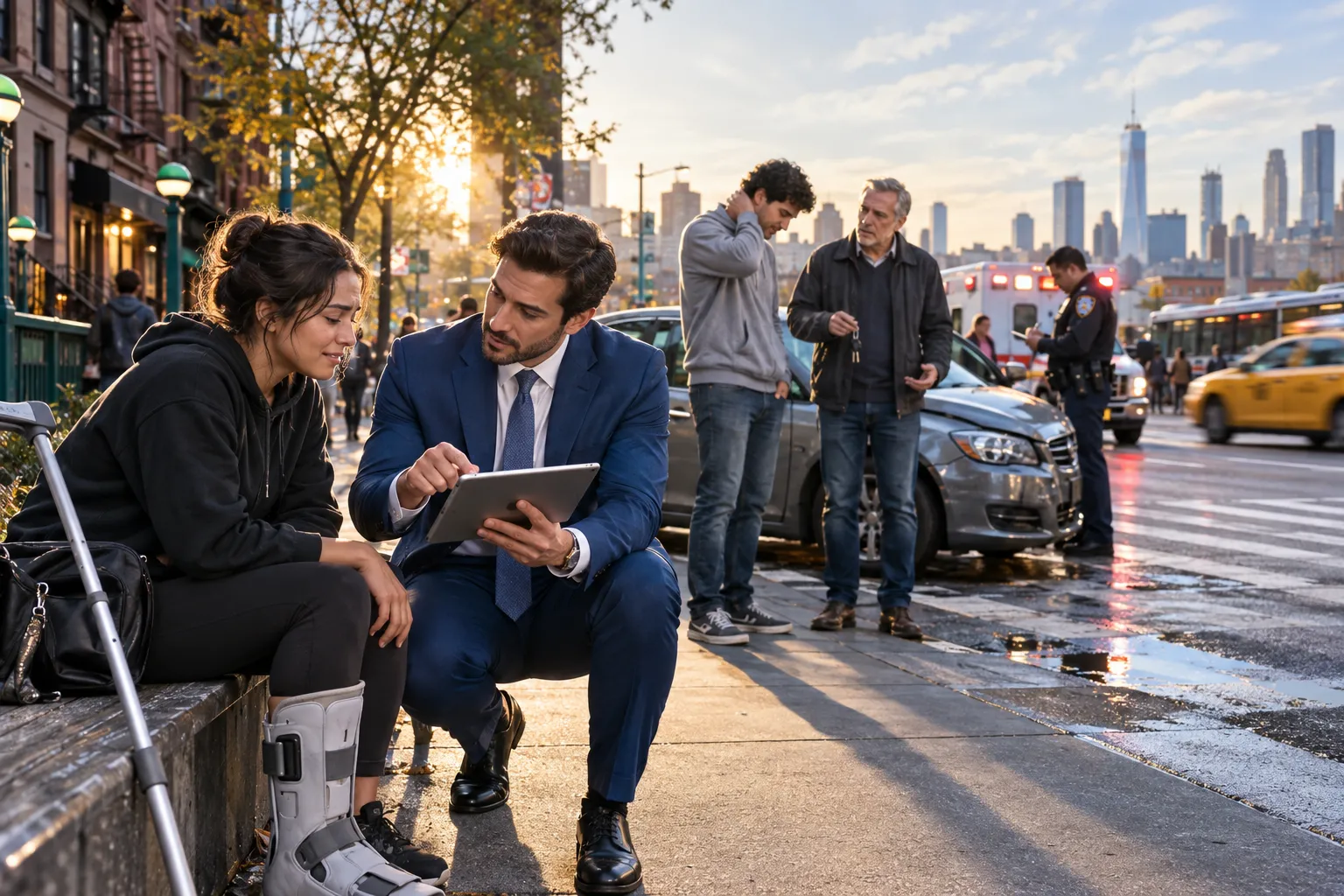
The driver is not always the only possible defendant. New York law can also place responsibility on a vehicle owner who allowed someone else to use the car, and evidence may support a negligent entrustment claim. These routes depend on who owned the vehicle, whether the driver had permission, what the owner knew, and how the collision occurred. A lawyer will examine those details alongside police records, witness accounts, vehicle information, and insurance documents.
Is the Owner of the Car Liable for Letting an Unlicensed Driver Borrow It?
Possibly. New York Vehicle and Traffic Law § 388 generally makes a vehicle owner liable for injuries caused by someone who operates the vehicle with the owner’s permission. The statute creates a presumption of permission, though evidence can affect whether it applies. The driver’s unlicensed status does not automatically settle the owner’s liability. Investigators need to establish ownership, permission, and the driver’s negligence.
Negligent Entrustment: Holding the Owner Accountable Under NY Law
Negligent entrustment is a claim that an owner acted carelessly by giving a vehicle to someone the owner knew, or had reason to know, was unfit to drive. Evidence may include the owner’s knowledge of the person’s lack of a valid license, prior unsafe driving, or inability to operate the vehicle safely. A license violation alone does not prove what the owner knew or establish every part of this claim.
Vicarious Liability Under Vehicle and Traffic Law § 388
Vicarious liability means one person can be held legally responsible for another person’s conduct under a statute. Under § 388, a vehicle owner may face liability when someone operates the car with permission and causes injury through negligence. This differs from negligent entrustment, which focuses on the owner’s decision to lend the vehicle. A case may require review of both theories, permission evidence, and the crash facts.
Hypothetical: A Brooklyn Rideshare of a Different Kind
These liability questions can affect which people and policies an injured person can pursue. Silberstein & Miklos, P.C. also provides a New York Elevator Accident Lawyer service for elevator injury matters, a distinct area from vehicle-owner liability. For a car crash, an unlicensed driver accident lawyer NYC can assess the driver’s conduct, the owner’s role, and the evidence before you decide how to proceed.
How Your Medical Bills Get Paid: No-Fault Insurance and Uninsured Motorist Claims
In New York, no-fault coverage can pay eligible medical expenses and some lost wages after a car crash, even when the other driver had no valid license. License status does not decide whether no-fault benefits apply. The available policy, your role in the crash, and the type of loss matter. An unlicensed driver accident lawyer NYC can help identify the insurer and track deadlines while you focus on treatment.
Does No-Fault Insurance Apply If the Other Driver Is Unlicensed?
Often, yes. No-fault, also called personal injury protection or PIP, is insurance that pays certain medical costs and lost earnings without first deciding fault. You generally seek benefits through the policy covering the vehicle in which you were riding. If you were a pedestrian or cyclist struck by a car, a different vehicle’s policy may apply. Coverage depends on the facts, so do not assume the other driver’s lack of a license eliminates your benefits.
Filing a No-Fault Claim: The 30-Day Deadline That Can Sink Your Case
Act quickly. New York no-fault rules generally require written notice of a claim within 30 days of the accident. Missing the deadline can put benefits at risk, though exceptions may apply in limited circumstances. Keep copies of forms, medical bills, wage records, and insurer correspondence. Address your no-fault application without waiting for the other driver’s insurance information or a criminal case to conclude.
Uninsured Motorist (UM) and SUM Coverage: Your Safety Net When the Driver Has No Insurance
If the at-fault driver has no applicable insurance, uninsured motorist (UM) coverage may provide a path to compensation for bodily injury. It is generally part of an auto policy, but policy terms and crash circumstances control. Supplementary uninsured/underinsured motorist (SUM) coverage may provide additional protection when the responsible driver has no insurance or too little coverage. Report the collision to your insurer promptly, review your policy, and preserve notice requirements. A claim against your own insurer still requires evidence of the crash, injury, and coverage.
What If the Driver Has No Insurance and You Have No UM Coverage?
Check every policy that could cover you, including a household auto policy or coverage tied to the vehicle involved. A lawyer can investigate whether another responsible person or policy belongs in the claim. If no insurance resource applies, pursuing the at-fault driver directly may remain possible, but collecting payment can be difficult when that person has few assets. Do not accept a quick payment or sign a release before understanding its effect on your injury claim. Gather policy documents and ask an attorney to review coverage options.
What to Do After an Accident With an Unlicensed Driver: Your Step-by-Step Action Plan
Protect your health first, then preserve evidence before details disappear. The driver’s license status is one fact in the investigation, not proof by itself that the driver caused the crash. Record what you observed, identify witnesses, and keep collision documents. If you are helping an injured family member, save paperwork and contact information together. A lawyer can obtain records and assess how the evidence supports a civil claim.
At the Scene: Proving the Driver Was Unlicensed
Do not confront the driver or investigate their license yourself. Give police the driver’s name and any information provided, and ask for the incident details needed to obtain the report. Photograph vehicle damage, the roadway, traffic signs, and the license plate if safe. Get witness names and contact information. A police report may document the driver’s information, but official driving records and other evidence may be needed to confirm license status.
Why Police Reports and Criminal Charges Strengthen Your Civil Claim
A police report can preserve names, statements, vehicle details, and an officer’s observations. A citation or criminal charge for driving without a license may show what authorities investigated, but it does not automatically prove the driver caused your injuries. A civil claim still needs evidence of negligence and harm. Keep the report number and any documents you receive, then share them with your attorney. Do not delay medical care while waiting for the report or the outcome of a traffic case.
Dealing With an Uncooperative or Hit-and-Run Unlicensed Driver
If the driver refuses to share information or leaves, call 911 and report what happened. Give police the vehicle description, plate number, direction of travel, and identifying details you observed. Ask witnesses or nearby businesses whether they have relevant information, but do not enter private property or pursue the driver. Preserve dashcam footage and photographs in their original form. Notify your insurer promptly because policy notice rules and deadlines can apply even when the driver is unidentified.
Comparative Negligence: What If You Were Partly at Fault?
New York follows comparative negligence, which means an injured person’s compensation can be reduced by that person’s share of fault. The other driver’s license violation does not settle how fault is divided. Insurers may review speed, traffic signals, visibility, road conditions, and witness accounts. Give an accurate account, avoid guessing, and do not sign a statement you do not understand. An unlicensed driver accident lawyer NYC can review the evidence and respond to disputed fault claims.
Use this checklist today:
- Get medical care and follow the treatment plan.
- Save photos, video, witness details, and the police report number.
- Notify the insurer and keep copies of all claim documents.
- Write down the crash details while your memory is fresh.
Take these steps promptly, then arrange a free consultation before giving a recorded statement or signing a release.
Compensation, Deadlines, and When to Call an Unlicensed Driver Accident Lawyer NYC Trusts

You may recover payment for accident-related losses if the evidence supports your claim and you meet New York’s legal requirements. Compensation depends on your injuries, available insurance, and proof of fault. An unlicensed driver accident lawyer NYC can assess those issues, identify deadlines, and explain whether a lawsuit or insurance claim is the right path. Silberstein & Miklos, P.C. is an AV-rated New York injury firm with decades of trial experience. A free consultation can help you understand your options before accepting payment or signing a release.
Damages You Can Recover: Medical Bills, Lost Wages, Pain and Suffering
Damages are the losses for which you seek compensation. Depending on the facts and coverage, they can include medical expenses, lost income, and pain and suffering. Keep bills, treatment records, wage statements, and proof of out-of-pocket costs. These records connect your losses to the collision and show how your injuries affect daily activities. A settlement release can end claims covered by its terms, so review any proposed payment carefully before signing.
The Serious Injury Threshold Under NY Insurance Law § 5102(d)
New York’s no-fault system limits when an injured person can sue for pain and suffering after a motor vehicle crash. Under Insurance Law § 5102(d), a claimant generally must show a legally defined “serious injury.” The statute includes categories such as a fracture, significant disfigurement, and permanent loss of use of a body organ, member, function, or system. Other categories have specific requirements. Medical records and a doctor’s findings can help establish whether an injury meets the threshold. The analysis depends on the injury and evidence, not the driver’s license status.
How Long Do You Have to File? Statute of Limitations in New York
The statute of limitations is the legal deadline for filing a lawsuit. Under CPLR § 214, the general deadline for a New York personal injury lawsuit is three years from the accident date. Different rules can apply to claims involving public entities or other special circumstances, and separate insurance notice deadlines can arrive much sooner. Do not wait: evidence can disappear, witnesses can become harder to locate, and an earlier deadline may affect your claim.
Collecting From a Driver Who Seems Judgment-Proof
A judgment is a court’s decision that a person owes money. Winning a judgment does not guarantee the person has assets or income available for collection. A careful claim review should examine applicable insurance, potentially responsible parties, and other lawful sources of recovery. The driver’s apparent inability to pay does not answer whether a policy or another responsible party may be involved. A lawyer can investigate those possibilities and explain the costs, limits, and practical steps before you decide how to proceed.
Silberstein & Miklos, P.C. also represents people in a separate area of injury law through its New York Elevator Accident Lawyer service. That service concerns elevator injuries, not vehicle collisions.
If you were injured, call Silberstein & Miklos, P.C. for a free consultation. Bring the police report, medical records, insurance information, and any settlement offer. We will review the facts, explain applicable deadlines, and identify next steps. Our AV-rated team serves New York City and Long Island, including Spanish-speaking clients. Do not settle for less without understanding the value and limits of your claim.
Frequently Asked Questions
What happens if I'm hit by an unlicensed driver in NYC?
You can still pursue a personal injury claim and seek compensation from the at-fault driver, and in some cases the vehicle owner. The driver’s lack of a license does not erase your rights. Focus on the evidence: how the crash happened, who owned the car, and whether the driver had permission to use it.
Can I sue an unlicensed driver for personal injury in New York?
Yes. You can bring a civil claim if evidence shows the driver’s carelessness caused your injuries, such as speeding, ignoring a traffic signal, or failing to yield. The license violation may matter to the investigation, but your claim turns on proof of negligence and the harm you suffered.
Is the owner of the car liable if they let an unlicensed driver borrow it?
Possibly. New York Vehicle and Traffic Law § 388 generally makes a vehicle owner liable for injuries caused by someone who drove with the owner’s permission. A negligent entrustment claim may also apply if the owner knew, or should have known, the person was unfit to drive.
Does no-fault insurance apply if the other driver is unlicensed?
In many cases, yes. New York’s no-fault coverage can pay eligible medical expenses and some lost wages regardless of the other driver’s license status. Do not assume an unlicensed driver lacks insurance; a driver can lack a license while the vehicle remains covered by a policy.
Can I file an uninsured motorist claim if the unlicensed driver has no insurance?
Yes, in many situations. If the at-fault driver has no applicable insurance, your own uninsured motorist coverage can become a source of compensation. An unlicensed driver accident lawyer NYC can investigate which policies apply and pursue every available source of payment.
Is an unlicensed driver the same as an uninsured driver?
No. An unlicensed driver lacks a valid license; an uninsured driver lacks applicable auto insurance. These are separate facts, and neither alone decides fault for the crash. A driver can lack a license while the vehicle is still insured, and a licensed driver can drive without insurance.
Does the other driver's license violation prove they caused the crash?
No. Under New York Vehicle and Traffic Law § 509, driving without a license is a traffic infraction, but that violation does not by itself establish fault. Fault depends on crash evidence such as police records, witness accounts, and how the collision occurred. Preserve those details before accepting any settlement.
