


Blog

Witnessed a Car Accident? What to Do — Even If You Already Left
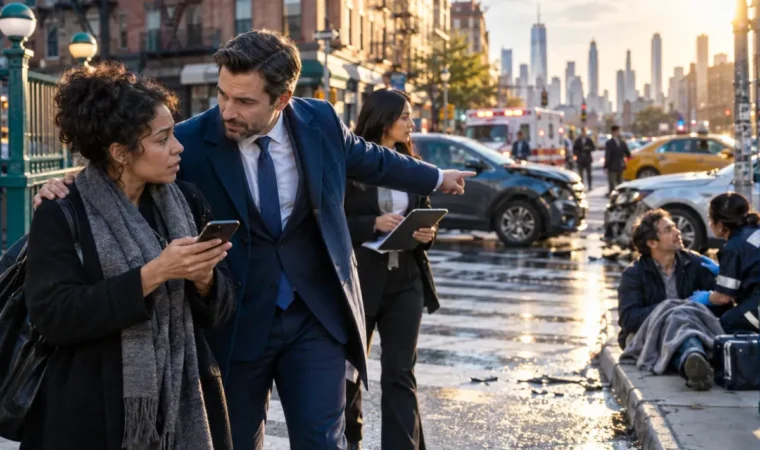
witness to a car accident
If you witnessed a car accident in New York, your first priorities are safety and accurate information. A bystander generally does not have the same legal duty to stop as a driver involved in the crash. A calm, specific account of what you saw can help police document the incident and clarify what happened.
Key Takeaways
- A bystander who saw the crash can leave the scene, but calling 911 to report injuries is a simple act that protects everyone involved.
- Write down details right away, including the time, location, vehicle descriptions, and direction of travel, because memory fades quickly.
- Give police a clear, factual statement of exactly what you observed and avoid guessing about causes or fault.
- If the crash leads to a legal claim, your account as an independent witness can carry real weight, so consider leaving your contact information with officers.
- If you were the injured driver instead of a bystander, our decades of trial experience are at your service, and a free consultation is one phone call away.
You can help without deciding who caused the collision or putting yourself in danger. Follow these steps, share only what you observed, and let emergency responders take charge.
Am I Legally Required to Stop If I Witness a Car Accident in New York?
No. A bystander who sees a crash generally is not legally required to stop under New York law. Vehicle and Traffic Law § 600 applies to drivers involved in certain crashes, not to an uninvolved person who happens to see one. If it is safe, calling 911 and giving factual information can still help.
The Short Answer for New York Bystanders: No, But You Should
You do not need to risk your safety or obstruct traffic to assist. If you can safely pull over, call 911 when someone appears hurt or the roadway presents a danger. Report what you saw without taking responsibility for the crash or deciding who was at fault.
How Witnessing Differs From Being Involved: Vehicle and Traffic Law Basics
New York Vehicle and Traffic Law § 600 sets duties for drivers involved in certain crashes, including stopping and sharing information in specified circumstances. Those duties do not automatically extend to a passing motorist who was not part of the collision. If you were involved, even indirectly, the facts may change; do not assume you count as only a bystander.
New York Good Samaritan Protections for Witnesses Who Help
New York Public Health Law Article 30 provides liability protections for people who voluntarily give emergency care at an emergency scene without expecting payment, subject to the law’s terms. You can call for professional help and follow a dispatcher’s instructions. If you are not trained, do not move an injured person unless an immediate danger makes movement necessary.
What to Do at the Scene: A Step-by-Step Guide for Witnesses
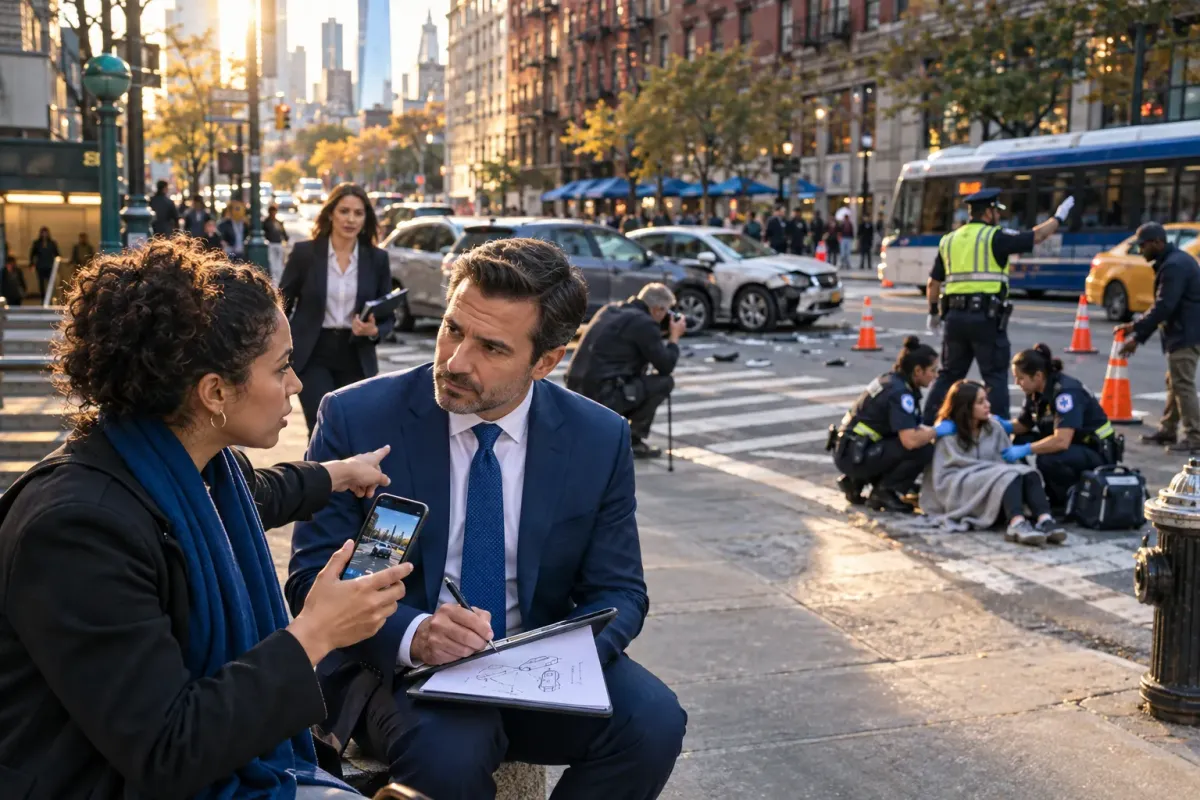
Your first job is to avoid creating another hazard. A useful account describes what you directly observed: where vehicles were, which direction they traveled, and what happened before impact. Do not guess about speed, distraction, or fault. Police need clear observations, not conclusions.
Step 1: Pull Over Safely and Stay Out of Traffic
Move to a legal, safe place away from moving vehicles. Turn on your hazard lights if appropriate, and do not stop in a travel lane or block emergency access. If you cannot pull over safely, keep moving and call 911 when you can do so without driving distracted.
Step 2: Call 911 Even If Someone Else May Have Already Called
Tell the dispatcher the crash location, how many vehicles appear involved, and whether anyone seems injured or trapped. Mention hazards such as fire, leaking fuel, or vehicles blocking traffic. Your details can help responders find the scene and assess what they will face, even if another caller has reported the crash.
Step 3: Help Stabilize the Scene Without Putting Yourself at Risk
Follow the dispatcher’s directions and keep clear of traffic, damaged vehicles, smoke, and leaking fluids. Do not enter an unsafe area to reach someone. Relay information to responders only when you can do so without adding risk.
Step 4: Give Police the Facts, Not Your Opinion on Fault
Tell officers what you personally saw and distinguish it from anything you heard afterward. Describe the vehicles’ direction, movement, lane position, traffic signals, and sequence of events. Say “I did not see the impact” if you arrived after it. Do not label a driver careless or speculate about the cause.
Step 5: Write Down What You Saw Before Memories Fade
As soon as you are safely stopped, make brief notes while details remain clear. Record the time and location, what happened before and after impact, and responding officers’ names or contact details if available. Preserve useful details without making a judgment about liability.
Witness Documentation Checklist: Time, Weather, Location, Vehicles, Lanes, and Signals
Keep a factual record, not a theory about the crash. Note what you observed directly and mark details you are unsure about. Do not interfere with police work or photograph injured people at close range. Record the scene only from a safe, lawful location.
- Date, approximate time, street address, intersection, and direction of travel
- Weather, lighting, visibility, road conditions, and traffic flow
- Vehicle colors, types, distinguishing features, and license plates if visible
- Lane positions, traffic signals, signs, and each vehicle’s movement
- What you saw before and after impact, plus anything you did not see
- Your name and reliable contact information for follow-up
For questions involving injuries at a construction site rather than a traffic collision, the firm also provides Construction Accident Legal Services. This separate practice area does not change a bystander’s duties at a car crash.
I Witnessed a Car Accident and Left: What Should I Do Now?
If you drove away after seeing a crash, you can still report what you observed. A bystander generally does not have the same duties as a driver involved in a collision, and leaving does not automatically mean you broke the law. Write down what you remember and contact police if your information could help identify what happened.
Leaving the Scene Is Not a Crime for a Bystander in New York
New York Vehicle and Traffic Law § 600 sets duties for drivers involved in certain crashes. It does not generally require an uninvolved passerby to remain at the scene. If you were involved in the collision, even in a way you did not initially recognize, your obligations could change. If you are unsure whether you were involved, get legal advice before making assumptions.
Focus on sharing an accurate account. You do not need to explain why you left or guess who caused the crash. A clear report of what you saw can help officers document the event.
How to Report an Accident You Saw After the Fact
Contact the police agency serving the location where the collision occurred. If someone faces immediate danger, call 911. For a past incident without an ongoing emergency, use the local precinct’s published contact information or non-emergency line. Explain that you saw the crash but have left, and ask how to provide your account.
- Write down the approximate time, location, and direction you were traveling.
- Record what you remember about the vehicles, their movements, and the moments before and after impact.
- Separate what you personally saw from anything you learned later, and identify details you cannot recall clearly.
- Give your name and reliable contact information, then ask whether an officer needs a written statement.
Do not fill gaps in your memory with guesses. If you have a dashcam recording or notes made soon after the crash, tell police they exist and ask how to provide them safely.
What Information to Give the Precinct or Non-Emergency Line
Offer specific observations that can help locate the incident and distinguish the vehicles. Include the street, nearby intersection or landmark, approximate time, weather, road conditions, and travel direction. Describe vehicle color, type, and any plate characters you recall. Explain whether you saw the collision, its immediate aftermath, or activity before it.
Be direct about uncertainty: “I saw a dark SUV enter the intersection, but I could not see its signal.” Avoid assigning fault, estimating speed without a clear basis, or repeating rumors. Keep a copy of your notes and record the agency or officer you contacted.
Should You Contact the Injured Person’s Attorney or Insurance Company?
Start with police if the crash has not been reported or you do not know whether responders documented it. If an injured person or their attorney contacts you, share only what you remember firsthand. You are not required to provide an insurer with speculation or a recorded statement on demand. Ask who they represent and what they need before agreeing to an interview.
Do not sign a statement you have not read carefully. If a lawyer asks for a formal statement or a deposition, a sworn question-and-answer session, ask about the process and whether you can review the written account for accuracy. You can help without taking sides or accepting responsibility for the outcome.
How Your Witness Statement Helps an Injured Victim’s New York Claim
A witness account can help clarify how a collision happened, especially when drivers describe events differently. New York comparative fault rules allow responsibility to be divided among parties, and a person’s share of fault can affect damages. An eyewitness does not decide that share. Your role is to provide accurate observations that police, attorneys, insurers, or a court can assess alongside other evidence.
Why Eyewitness Detail Matters Under New York’s Comparative Fault Rules
Details about lane position, direction of travel, traffic signals, and movement sequence can help clarify disputed points. A signed statement can provide evidence even when a police report exists, and it can be especially useful when no report was filed. Its value comes from specific observations, not a conclusion about who was legally at fault.
What a Strong Witness Statement Contains (and What to Leave Out)
Include your name and contact information, the date and location, where you were positioned, what you could see, and the sequence you observed. State whether you saw the impact or arrived afterward. Note limits on visibility, such as darkness, traffic, distance, or an obstructed view. Do not assume a driver’s attention, speed, sobriety, or intentions unless you directly observed facts supporting that detail.
A Simple Witness Statement Framework You Can Follow
Use this structure as a starting point, and keep every detail truthful:
“My name is [name]. On [date] at about [time], I was at [location]. I saw [specific actions in the order they occurred]. I [did or did not] see the moment of impact. My view was [clear or limited, with the reason]. This statement reflects what I remember personally.”
Read the statement carefully before signing. Correct errors, mark uncertain details, and do not adopt wording that goes beyond your memory.
Being Contacted Later: Adjusters, Attorneys, Depositions, and Testifying
An insurance adjuster, attorney, or court may contact you to ask what you observed. Ask who they represent and whether the conversation is voluntary before answering. If you receive a subpoena, a formal order to appear or provide evidence, do not ignore it; get legal guidance about your duties and the response deadline.
Silberstein & Miklos, P.C. provides Construction Accident Legal Services for a separate type of injury matter. That service is distinct from a motor vehicle claim and is not a service for car-crash witnesses.
What Not to Do as a Witness: Handling the Aftermath
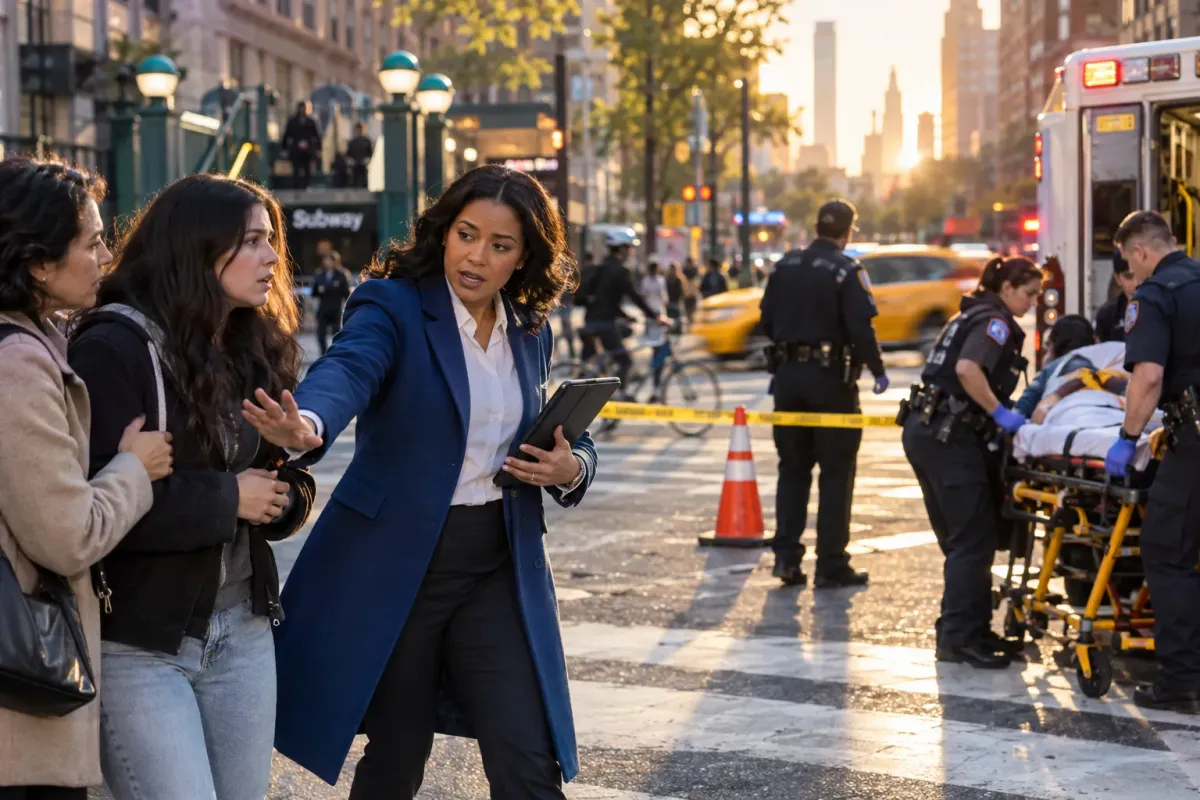
Good intentions do not replace safety or training. Stay within what you can safely do, and leave medical care and traffic control to professionals. If you are uncertain about your choices, protect your well-being and give a truthful account if asked.
Don’t Move an Injured Person
Do not pull someone from a vehicle or change their position unless an immediate danger, such as fire, makes movement necessary. Moving an injured person can worsen a neck, back, or other injury. Call 911 and follow the dispatcher’s instructions. If the person is conscious, speak calmly and encourage them to stay still until help arrives.
Don’t Argue With Drivers or Assign Fault
Avoid confrontation, accusations, and promises about who will pay. Stress can escalate quickly, and fault is not for a bystander to decide at the roadside. Give police the facts you observed, then let investigators and the parties’ representatives assess them. Do not repeat a driver’s explanation as something you personally saw.
Don’t Post About the Accident on Social Media
Do not post photos, video, names, license plates, or guesses about what happened. A post can expose injured people’s private moments and spread inaccurate claims. If you recorded relevant material, keep the original file and do not edit it. Provide it to police or an authorized investigator through an appropriate channel if requested.
Witnessing a Serious Crash: When Feeling Shaken Is Normal and When to Get Help
After seeing a severe injury or death, you may feel shaken, have trouble sleeping, or find that images return unexpectedly. The DSM-5 recognizes witnessing traumatic death or serious injury as a form of trauma exposure relevant to PTSD. That does not mean every witness develops PTSD, and no one should diagnose themselves from one reaction.
If distress continues, disrupts daily life, or feels hard to manage, contact a mental health professional or your doctor. Seek immediate help if you feel at risk of harming yourself or someone else. You can get support even if you were not physically hurt.
Minor Fender Bender vs. Serious Crash: When You Can Go and When You Should Stay
For a minor fender bender, call 911 if anyone may be injured, traffic is blocked, or a hazard remains. If the drivers appear safe and responders do not need you, you can leave after offering your contact information or sharing a brief account. Do not remain in a dangerous spot just to observe.
Stay only where it is safe and useful. A serious crash with visible injuries, an unconscious person, fire, or trapped occupants calls for an emergency call and clear information to responders. Once help has arrived and your account is recorded, follow police instructions. For help understanding how a witness account fits a New York injury claim, contact Silberstein & Miklos, P.C. for a free consultation. We provide expert legal representation and bring experience with million-dollar settlements. Call ASK4SAM and let our team explain the next step.
Frequently Asked Questions
Do I have to stay at the scene if I only witnessed a car accident in New York?
No. Under New York Vehicle and Traffic Law § 600, the duty to stop applies to drivers involved in a crash, not to uninvolved bystanders. If it is safe, calling 911 and sharing what you saw can still make a real difference for the people involved.
Can a passenger be a witness in a car accident?
Yes. A passenger can absolutely be a witness in a car accident, and passenger accounts often carry significant weight because they observed the crash directly. If you were a passenger, write down what you saw as soon as possible and share only facts with police, not opinions about fault.
Do family members count as witnesses in a car accident case?
Yes, family members can count as witnesses, though insurance companies and defense attorneys may argue their testimony is biased. A family member’s firsthand account of what they saw still matters. Strong cases are built on multiple credible witnesses, which is why preserving every account early is critical.
I witnessed a car accident and left the scene. Did I break the law?
No. A bystander who leaves the scene of a crash has generally not broken New York law, because Vehicle and Traffic Law § 600 places duties only on drivers involved in the collision. Write down what you remember while it is fresh and contact police if your observations could help.
What should a witness to a car accident tell the police?
Tell police only what you directly observed: vehicle positions, direction of travel, lane positions, traffic signals, and the sequence of events before and after impact. If you arrived after the crash, say plainly that you did not see the impact. Officers need facts, not guesses about who caused the collision.
Am I protected if I help an injured person at a car accident scene in New York?
Yes. New York Public Health Law Article 30 provides liability protections for people who voluntarily give emergency care at an emergency scene without expecting payment, subject to the law’s conditions. Call 911, follow the dispatcher’s instructions, and do not move an injured person unless there is immediate danger.
How do I document what I saw as a witness to a car accident?
Write down the date, time, location, weather, road conditions, vehicle descriptions, license plates, and each vehicle’s movement before and after impact. Note anything you did not see and mark details you are unsure about. Record this from a safe, lawful location while your memory is clear, and leave your contact information with police.
