


Blog

Best Dog Bite Injury Attorneys in Queens: How to Choose the Right Lawyer

Who are the best dog bite injury attorneys in Queens?
Who are the best dog bite injury attorneys in Queens? Look for a lawyer who evaluates your case, explains New York’s rules on dog-owner liability, and tells you who will handle the claim and appear in court. Silberstein & Miklos, P.C. has AV Martindale-Hubbell ratings and a trial-ready practice. Use the questions below to assess any attorney before you sign.
Key Takeaways
- The best Queens dog bite attorney will explain New York’s liability rules in plain language and identify exactly who pays your damages.
- Ask who will actually handle your claim and appear in court, because some firms hand cases off to other lawyers.
- A trial-ready record matters, since insurance companies take aggressive preparation seriously and often offer more when they know your lawyer will litigate.
- Verify credentials such as AV Martindale-Hubbell ratings and peer recognition before you commit to any firm.
- Use a short list of direct questions at your free consultation to judge any attorney before signing an agreement.
A bite can leave you facing medical bills, missed work, and uncertainty about who will pay. Start by getting clear answers about the law, the firm’s role, and whether a potential recovery can be collected.
First, the Direct Answer: What Separates the Best Queens Dog Bite Attorneys From the Rest
The 40-Word Answer for Bite Victims and Their Families
Quick answer: Choose a Queens attorney who explains how New York law applies, assesses evidence and insurance, and identifies who is responsible for your case. Ask about courtroom experience, communication, fees, and risks that could limit recovery. Do not decide by advertising alone.
Trial Lawyer vs. Referral Agency: The One Question That Reveals the Difference
Ask: “Who will be my attorney, who will handle my case day to day, and who will appear in court if the case proceeds?” Request the names and roles of the people responsible. The attorney reviewing evidence, negotiating with an insurer, and preparing for court should be clear before you sign.
New York has a mixed rule for dog-bite claims. Under the state’s strict-liability framework, an owner can be responsible for medical costs caused by a bite. The one-bite rule concerns other damages: proving negligence generally requires evidence that the owner knew, or should have known, the dog had dangerous tendencies and failed to use reasonable care. Ask how those rules fit your facts, rather than accepting a promise of a result.
Why Your Choice of Attorney Matters More in New York Than in Most States
The legal analysis can affect which losses you can pursue and what evidence matters. Prior complaints, witness accounts, medical records, and the owner’s knowledge of the dog’s behavior may each play a role. An attorney should distinguish medical expenses from claims for lost income or pain and suffering, which can require proof of negligence. Ask for a plain-language assessment of your case’s strengths, gaps, and next steps.
How to Vet Any Queens Dog Bite Lawyer: 10 Questions to Ask Before You Sign

Question 1-3: Verdicts, Courtroom Experience, and Who Actually Tries the Case
Ask questions that test whether the lawyer can explain the work behind a claim, not just describe a settlement as likely:
- Have you handled dog-bite claims involving facts like mine?
- What courtroom work have you personally done in injury cases?
- Who will prepare the case and appear in court if needed?
Ask how the attorney approaches liability evidence, medical documentation, and settlement discussions. A verdict or settlement from another case does not predict your outcome. Your injuries, proof, available insurance, and the dog owner’s ability to pay all matter.
Question 4-7: Bar Status, Disciplinary History, and Who Handles Your File Day to Day
Confirm the lawyer’s New York admission and review public attorney records for status or discipline. Ask who will answer routine questions, update you on insurer communications, and explain court deadlines. Find out how the firm handles records, witness contacts, and changes in your treatment. You should know the responsible attorney and how to reach that person, even if several staff members work on your case.
Question 8-10: Case Selection Honesty, Communication, and Fee Structure
Ask what facts could weaken your claim, whether insurance or other assets appear available, and how the firm charges. Get the fee terms in writing, including how case costs are handled. A direct lawyer will discuss uncertainty rather than guarantee compensation. Silberstein & Miklos, P.C. offers a completely free consultation to determine if a person has a case. There is never a fee unless the firm wins compensation via a lawsuit or settlement.
If a bite caused a head injury, ask whether a separate legal team addresses that harm. The firm’s Queens Traumatic Brain Injury Attorneys specialize in traumatic brain injury (TBI) and spinal injury cases. Confirm that the lawyer handling your dog-bite claim will coordinate related injury issues.
Referral Mill vs. TV Advertiser vs. Trial Firm: A Side-by-Side Comparison
Advertising alone does not establish who will represent you. Compare firms by asking the same questions and seeking written answers about case responsibility and fees.
| What to check | Referral-focused operation | Advertising-led firm | Trial-ready firm |
|---|---|---|---|
| Attorney responsible | Ask which firm receives the referral and who signs your agreement. | Ask whether the lawyer you meet will stay involved. | Identify the attorney accountable for decisions and court appearances. |
| Court preparation | Confirm which lawyer handles litigation if a referral occurs. | Ask who prepares filings and appears in court. | Request a clear explanation of how the case could proceed through litigation. |
| Communication and fees | Ask whom to contact after transfer and who explains costs. | Get contact expectations and fee terms in writing. | Confirm a named contact, update process, and written fee agreement. |
Use the comparison to verify responsibilities, not infer a firm’s quality from advertising style. Silberstein & Miklos, P.C. also has Queens Traumatic Brain Injury Attorneys for matters involving TBI and spinal injuries. Bring your questions to a free consultation and ask for direct answers before choosing counsel.
What Your Dog Bite Case Is Actually Worth Under New York Law
Strict Liability Covers Medical Bills, the One-Bite Rule Governs Other Damages
New York law makes a dog’s owner strictly liable for medical costs caused by a bite. Strict liability means you do not have to prove the owner knew the dog was dangerous to seek those costs. Other damages, including lost wages and pain and suffering, generally require proof that the owner knew or should have known of the dog’s dangerous tendencies and failed to use reasonable care. This is commonly called the one-bite rule. It does not require a prior bite; evidence of threatening behavior or earlier complaints can also matter.
The legal route affects which losses you can pursue. Keep bills, treatment records, and proof of missed work. An attorney can assess how the evidence supports each part of a claim.
What Counts as a “Dangerous Dog” in New York
New York Agriculture and Markets Law § 123 defines a dangerous dog to include one that attacks a person or companion animal without justification, or behaves in a way a reasonable person would see as a serious threat. This definition and the evidence needed to prove owner knowledge are related, but they are not identical questions. The dog’s behavior before the bite, witness accounts, and prior complaints can help establish what the owner knew.
In Queens, record the location, date, and names of witnesses. Share any known history of lunging, snapping, or prior attacks with your attorney; no single fact alone decides the claim.
When a Landlord or Building Owner Is on the Hook for a Tenant’s Dog
A landlord is not automatically responsible because a tenant’s dog bites someone in an apartment building or on its grounds. A claim may depend on evidence that the landlord knew the dog had dangerous tendencies and could control the relevant condition, such as access to a shared area. Lease terms, earlier complaints, building communications, and control over the space can matter.
Preserve messages to management and note where the bite occurred. Have a lawyer review the evidence before ruling out a claim.
Compensation Breakdown: How Each Damage Type Is Proven
Case value depends on supported losses and whether the legal requirements for each category are met. Medical records, bills, wage documents, photographs, and treatment notes help show the injury’s effects. No chart can promise a particular recovery. The table identifies common proof and legal issues that may apply.
| Damage category | Evidence to preserve | New York issue |
|---|---|---|
| Medical costs | Invoices, prescriptions, and treatment records | Strict liability applies to medical costs caused by the bite. |
| Lost wages | Employer records, pay statements, and missed-work dates | Generally requires proof of negligence under the one-bite rule. |
| Pain and suffering | Medical notes and records describing symptoms and daily limits | Generally requires proof of negligence and supporting evidence. |
| Scarring or lasting effects | Photographs over time, specialist records, and treatment plans | The nature and duration of the injury affect the assessment. |
Emotional Distress, PTSD, and the Therapy Documentation That Supports Them
A dog attack can lead to fear, sleep problems, or other emotional effects, including post-traumatic stress disorder (PTSD). Report symptoms to a qualified health professional and follow appropriate care recommendations. Treatment records can document when symptoms began, their effects on daily activities, and whether they continue. Distress alone does not establish a compensable claim; assess its legal basis and proof with the rest of the case.
Your First 72 Hours After a Dog Bite in Queens: Evidence and Decisions
Step-by-Step: Medical Care, Reporting, and Photographs
Act promptly, even if the wound looks minor. A medical professional can assess the injury and recommend care; timely records also connect the bite to your symptoms. Do not delay treatment out of sympathy for the dog or concern about blame. Record the owner’s name and contact information if available, and ask witnesses for their details.
Report the incident to appropriate authorities and photograph the wound, clothing damage, and location when safe. Take follow-up photographs as the injury changes. Write down the time, place, what happened, and the dog’s behavior while details are fresh.
Documents to Gather, Including NYPD Reports, 311 Complaint History, and Animal Care Centers Bite Records
Keep records that may establish where the bite happened, what occurred, and how the injury affected you. An NYPD report, 311 complaint history, or Animal Care Centers bite record may document the incident or earlier concerns. Availability and relevance depend on the circumstances; a record may not exist or prove owner knowledge by itself.
- Medical records, bills, prescriptions, and follow-up instructions
- Incident or police report details and any 311 complaint information
- Animal Care Centers records, if available, plus owner and witness contact details
- Photographs, damaged clothing, and communications with the owner or property manager
Honest Case Viability: What Happens When the Owner Has No Insurance or Is Judgment-Proof
A strong liability case does not guarantee that money can be collected. Homeowners or renters insurance may provide coverage, but the policy, exclusions, limits, and facts must be checked. If the owner has no applicable insurance or assets, collecting a court judgment may be difficult or impossible. A responsible case review addresses collectability alongside liability and injury evidence, so you understand practical limits before deciding what to do.
Do not assume coverage exists or accept an insurer’s explanation without review. Gather insurance details the owner provides and ask an attorney to assess potential coverage and collection options.
Moderate Injuries Welcome: When a Smaller Case Still Justifies a Claim
A bite does not need to cause catastrophic harm to deserve a legal review. A smaller wound can still lead to medical expenses, missed work, infection concerns, or a visible scar. The key questions are what care you needed, what losses followed, what evidence supports owner knowledge when required, and whether a recovery could be collected. No attorney can responsibly promise compensation before reviewing those facts.
Keep records even if your injury seems moderate, then request a free consultation to discuss the evidence and options. Silberstein & Miklos, P.C. offers a completely free consultation to determine if a person has a case. There is never a fee unless the firm wins compensation via a lawsuit or settlement.
Bitten on the Job in Queens? Workers’ Comp vs. a Personal Injury Claim
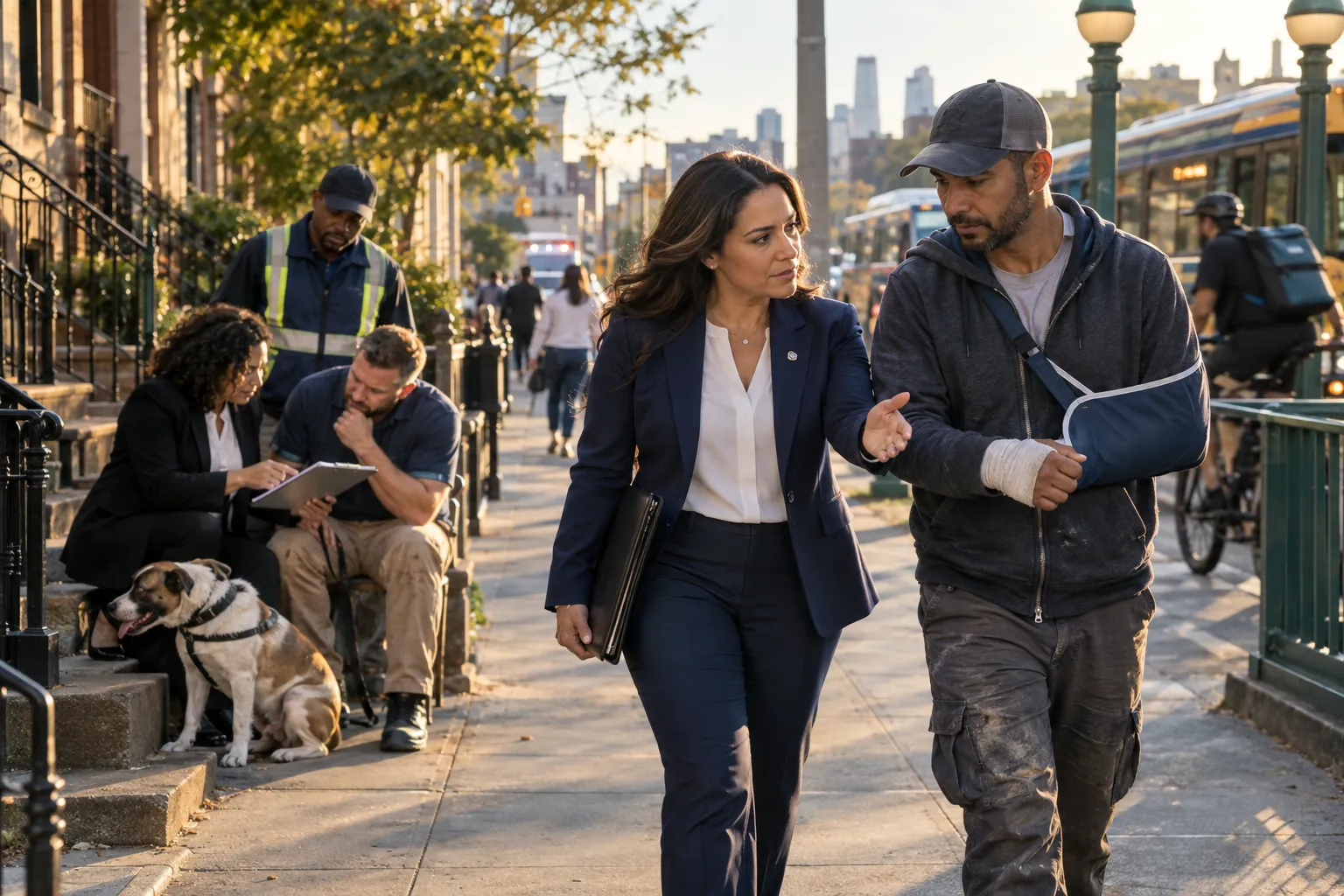
If a dog bites you while you are working, report the injury to your employer and seek medical care promptly. Workers’ compensation may cover eligible medical treatment and part of your lost wages, regardless of who caused the bite. You may also have a separate personal injury claim against the dog’s owner when the facts support it. These claims follow different rules; pursuing one does not automatically replace the other.
When a Dog Bite Is a Workers’ Comp Claim: Mail Carriers, Delivery Drivers, Home Health Aides, Nannies
A workplace bite may qualify for workers’ compensation when it happens while you perform your job. This can include a mail carrier bitten on a delivery route, a driver making a work-related stop, or a home health aide or nanny injured while providing care in a client’s residence. Tell your employer promptly and follow the required claim process. Keep a copy of your incident report and medical paperwork.
When You Can Also Sue the Dog Owner Directly
A separate claim against the dog’s owner may be available if the evidence supports legal responsibility. Workers’ compensation addresses benefits through your employment; a personal injury claim addresses the owner’s responsibility under New York law. A lawyer should assess how the bite happened, what the owner knew about the dog, and whether insurance or other assets could pay a claim. These are different legal issues, so ask who will evaluate each part.
| Question | Workers’ compensation | Claim against the dog’s owner |
|---|---|---|
| What does it address? | Eligible work-related medical care and wage benefits | Losses tied to the owner’s legal responsibility |
| What should you do? | Notify your employer and follow claim procedures | Preserve incident details and request a legal review |
| Can both apply? | Potentially. The facts and applicable rules determine the available claims and how they interact. | |
How the Workers’ Comp Lien Works Against Your Recovery
If you recover money from the dog’s owner, the workers’ compensation carrier may have a lien, a claim to reimbursement from some of that recovery for benefits it paid. The lien can affect how much you ultimately keep. Its treatment depends on the circumstances and applicable law. Do not accept a settlement or agree to reimbursement terms without understanding the effect on your net recovery. Ask the attorneys handling the claims to explain the numbers in writing.
Workplace Dog Bite: Who Pays, How Long It Takes, and What If I Waited to See a Doctor?
Who pays? Workers’ compensation may pay eligible benefits for a work-related injury. The dog owner or an insurer may be responsible for a separate claim if the evidence and law support it. How long will it take? Timing depends on treatment, disputed issues, insurance, and claim procedures. What if I delayed care? Get medical attention now and tell the provider when and how the bite occurred. A delay does not by itself answer whether you have a claim, but it can make clear records more difficult.
Frequently Asked Questions
If a dog bites someone, does it have to be put down?
No, New York law does not automatically require a dog to be put down after a bite. The outcome depends on the severity of the attack, the animal’s history, and any court or health department determination. An experienced attorney can explain how the incident may affect your injury claim.
Is it worth it to sue for a dog bite?
Yes, a dog bite claim is often worth pursuing if you face medical bills, lost wages, or lasting scarring. New York holds dog owners strictly liable for medical costs from a bite, and other damages may be recoverable with proof of negligence. A free consultation will reveal what your case is truly worth.
What percentage do most accident lawyers take?
Most personal injury lawyers work on contingency, taking a percentage of your recovery only if they win. Silberstein & Miklos, P.C. charges no fee unless the firm wins compensation through a settlement or lawsuit. Get the fee terms in writing before you sign anything.
What damages can I recover in a New York dog bite case?
New York law makes a dog’s owner strictly liable for your medical costs, meaning you do not need to prove the owner knew the dog was dangerous for those bills. Lost wages and pain and suffering require proof that the owner knew or should have known of the dog’s dangerous tendencies.
How do I know if a Queens dog bite lawyer is trial-ready?
Ask one direct question: who will handle my case day to day and who will appear in court if it proceeds? A trial-ready firm will name the attorney responsible for evidence, negotiations, and litigation. Silberstein & Miklos, P.C. holds an AV Martindale-Hubbell rating and decades of courtroom experience.
What evidence matters most in a Queens dog bite claim?
Prior complaints about the dog, witness accounts, medical records, and proof of the owner’s knowledge of the animal’s behavior all matter. Insurance coverage and the owner’s ability to pay also affect recovery. Document everything now, then bring it to a free consultation so we can assess the strengths and gaps.
Can a dog who has bitten be trusted again?
That decision belongs to animal behavior professionals and the owner, not to your attorney. What matters for your claim is documenting the bite, the dog’s history, and the owner’s knowledge of any dangerous tendencies. We use that evidence to fight for the maximum compensation you deserve.
