


Blog

Best NYC Lawyers for Construction Brain Injuries: How to Choose the Right Attorney
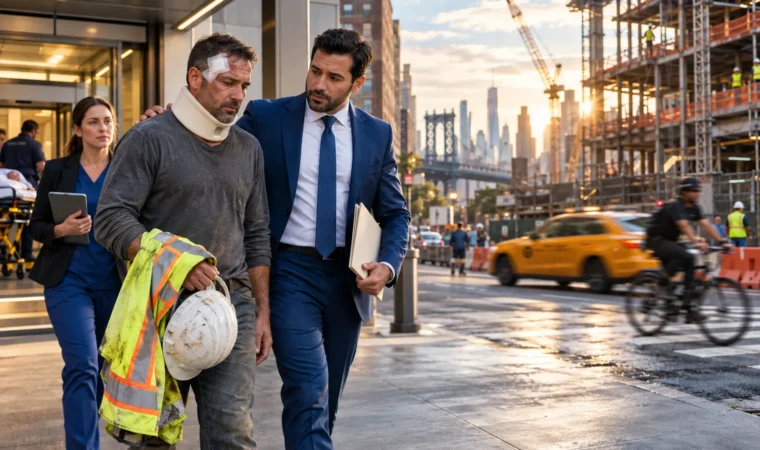
Best NYC lawyers for construction brain injuries.
Best NYC lawyers for construction brain injuries begin by identifying how the injury happened, what medical care it requires, and which New York laws may apply. A brain injury can affect memory, balance, speech, mood, and a worker’s ability to earn a living, even when initial symptoms seem mild. Queens Construction Injury Attorneys & Accident Lawyers are provided by Silberstein & Miklos, P.C., which represents injured construction workers in NYC.
Key Takeaways
- Choosing the right attorney starts with a clear understanding of how the construction accident occurred and what medical treatment the brain injury demands.
- Mild early symptoms can mask lasting damage to memory, balance, speech, and mood, so prompt medical evaluation is essential after any head injury on a job site.
- New York law provides strong protections for injured construction workers, and an experienced lawyer can identify which statutes support your claim for compensation.
- A qualified attorney should have a proven record handling traumatic brain injury claims and know how these injuries affect a worker’s long-term earning capacity.
- Silberstein & Miklos, P.C. represents injured construction workers throughout NYC and offers dedicated Queens construction injury legal services.
Construction Brain Injuries in NYC: What Workers and Families Need to Know First
A construction worker who may have suffered a brain injury should get prompt medical attention, report the incident, and preserve evidence about what happened. A traumatic brain injury (TBI) can result from a blow to the head or a sudden force that moves the brain inside the skull. Symptoms may not appear immediately, so medical assessment matters even if the worker did not lose consciousness. Keep records of symptoms, treatment, missed work, and communications about the incident.
Why Construction Sites Are a Leading Cause of Traumatic Brain Injury (TBI)
Construction work exposes people to elevated surfaces, heavy equipment, moving materials, and changing site conditions. These figures reflect the serious stakes, but an individual worker’s diagnosis and recovery depend on the specific injury and medical findings.
Common Causes: Falls From Heights, Falling Objects, Struck-By Incidents, and Crane Accidents
Falls from scaffolds, ladders, roofs, or unprotected openings can cause a worker to strike their head or land with force. Tools, building materials, and debris may fall from above; workers can also suffer head trauma in struck-by incidents involving vehicles or equipment. Crane-related incidents may expose workers to falling loads or sudden impacts. In NYC, falls from heights are the leading cause of construction worker fatalities, and many involve traumatic brain injuries. The injury mechanism can help doctors and investigators understand what happened.
Concussions, Contusions, and Diffuse Axonal Injuries: Types of Brain Injuries and Why Severity Matters
A concussion is a brain injury that can affect thinking, balance, and concentration. A contusion is bruising of brain tissue, while diffuse axonal injury involves damage to nerve fibers caused by forceful movement of the brain. Symptoms can include headache, confusion, dizziness, nausea, light sensitivity, memory problems, or changes in behavior. A person’s outward appearance does not reliably show the full extent of an injury. Diagnosis, imaging, neurological examinations, and follow-up care help establish the medical picture.
First Steps After a Brain Injury on a NYC Construction Site
Act promptly and keep a clear record. Follow medical instructions, report the incident through the appropriate workplace process, and avoid giving an insurer a recorded statement before understanding your rights. Preserve photographs, witness names, incident reports, and relevant messages if available. A family member can help track symptoms and appointments if the injured worker has difficulty concentrating or remembering details.
Protect your health and your record: Seek medical care promptly, follow up about new or worsening symptoms, and keep copies of treatment and incident documentation. Do not assume mild initial symptoms mean the injury is minor.
How New York Labor Law Protects Construction Workers With Brain Injuries
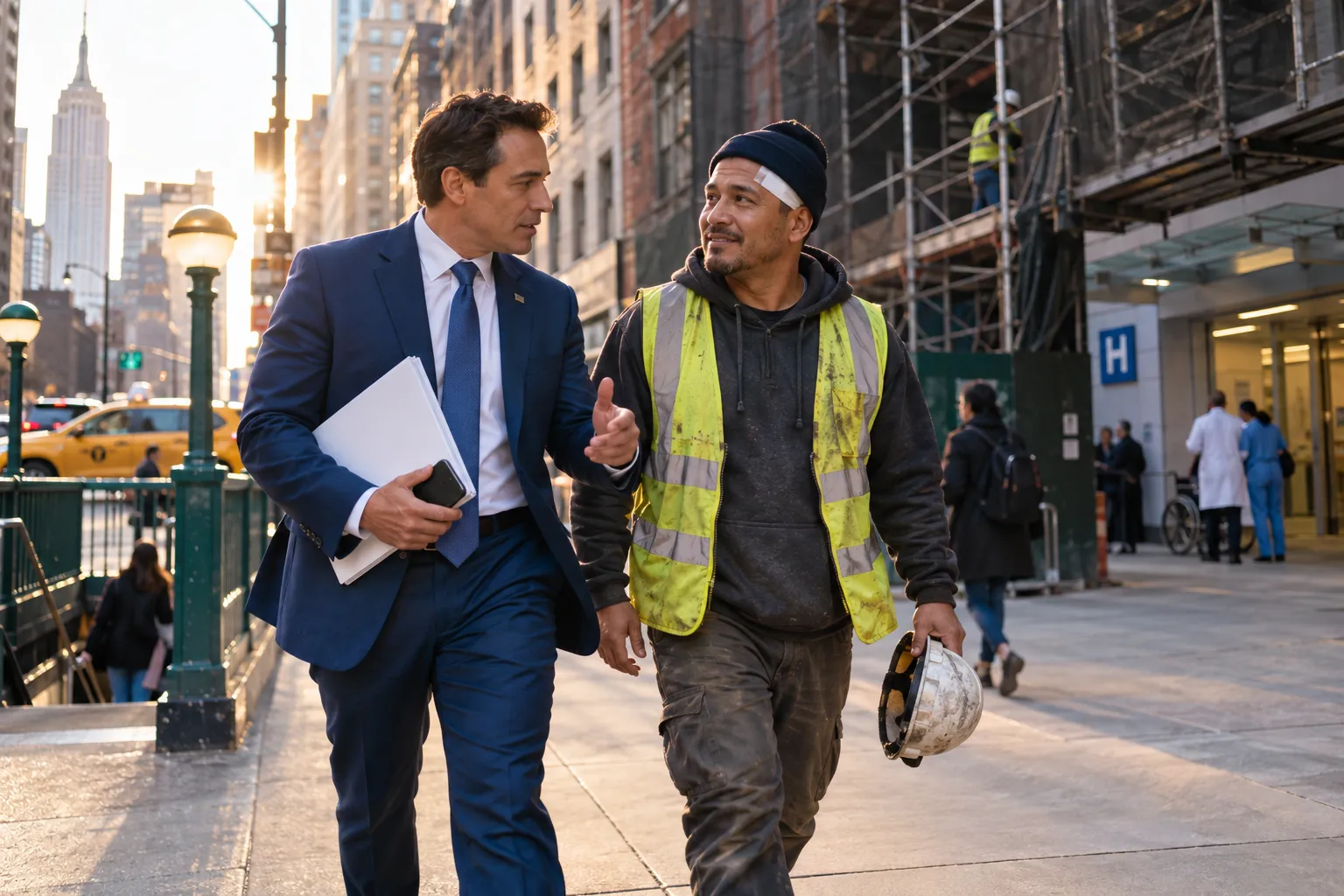
Labor Law Section 240 (The Scaffold Law): Falls and Falling Objects That Cause Head Injuries
New York Labor Law Section 240(1) addresses certain elevation-related risks in construction, including falls from height and injuries from falling objects. It can apply when a worker is engaged in covered work and an owner or contractor fails to provide required safety devices, such as appropriate scaffolding or fall protection. A head injury from a fall or falling material may raise a Section 240 claim, but coverage depends on the work, the hazard, and the facts. The statute does not provide automatic compensation for every construction injury.
Labor Law Section 241(6): Safety Rule Violations as Grounds to Sue
Section 241(6) requires owners and contractors to provide reasonable and adequate protection for workers at construction, excavation, and demolition sites. A claim generally must identify a specific, applicable provision of the New York Industrial Code and show that its violation contributed to the injury. In a brain injury case, the relevant safety issue might concern a work surface, opening, falling object, or equipment hazard. The rule must fit the site condition and work activity.
Labor Law Section 200 and Common-Law Negligence: Proving the Site Was Unsafe
Labor Law Section 200 reflects a general duty to provide workers with a reasonably safe workplace. A claim may focus on a dangerous site condition or the way work was performed. The evidence needed can differ: for a site condition, the case may turn on whether the responsible party created the hazard or had notice of it; for means and methods of work, supervision and control may be central. Photos, inspection records, witness accounts, and incident documentation can help establish the conditions that caused the injury.
Workers’ Compensation vs. a Third-Party Lawsuit: You May Have Both Claims
Workers’ compensation can provide benefits for medical care and part of a worker’s lost wages, subject to New York’s rules. It generally does not provide damages for pain and suffering. A separate lawsuit may be possible against a negligent third party, such as an owner or contractor, when the evidence and applicable law support a claim. These claims serve different purposes, and a third-party recovery may affect compensation liens or repayment obligations.
| Claim or law | What it may address | Key issue |
|---|---|---|
| Workers’ compensation | Work-related medical care and partial wage replacement | Whether the injury is covered under workers’ compensation rules |
| Labor Law Section 240(1) | Certain elevation-related hazards | Whether the work and injury fall within the statute’s protections |
| Labor Law Section 241(6) | Specific construction safety-rule violations | Whether an applicable Industrial Code provision was violated |
| Labor Law Section 200 | Unsafe workplace conditions or work practices | Notice, creation of the hazard, or control of the work, depending on the claim |
Queens Construction Injury Attorneys & Accident Lawyers can help injured workers understand how these protections may apply. Silberstein & Miklos, P.C. has served the Queens area for two decades and offers free consultations through 1-877-ASK4SAM. Reviewing the worksite, medical evidence, and employment records can clarify which claims may be available.
Who Can Be Held Liable for Your Construction Brain Injury and What Compensation Is Available
General Contractors, Property Owners, Subcontractors, and Equipment Manufacturers: Who Owes You Damages
Responsibility depends on who controlled the work, created or knew about a hazard, supplied equipment, or had a legal duty to provide a safe jobsite. A property owner or general contractor may be responsible under applicable New York law; a subcontractor may be liable for its own unsafe work, and an equipment manufacturer may face a product claim if a defect contributed to the injury. More than one party may share responsibility. Identifying them takes a review of contracts, jobsite roles, safety records, equipment, and witness accounts. The best NYC lawyers for construction brain injuries assess the full chain of responsibility rather than relying on a single explanation of the incident.
| Potentially responsible party | Evidence to examine | Possible issue |
|---|---|---|
| Property owner or general contractor | Site safety records, contracts, inspection logs | Whether a legal duty applied and was breached |
| Subcontractor | Work assignments, supervision, incident reports | Whether its work or conduct contributed to the hazard |
| Equipment manufacturer or supplier | Equipment condition, maintenance history, product information | Whether a defect or failure contributed to the injury |
Recoverable Damages: Medical Bills, Lost Wages, Future Care Costs, and Pain and Suffering
A third-party injury claim may seek compensation for documented losses tied to the brain injury. Depending on the evidence and applicable law, damages can include emergency and ongoing medical treatment, rehabilitation, prescription costs, lost income, reduced future earning capacity, and future care expenses. A claim may also include pain and suffering, including effects on daily activities and relationships. Preserve bills, pay records, treatment notes, and information about changes in work or household responsibilities. Workers’ compensation benefits and a lawsuit serve different purposes, so a lawyer should review potential liens or repayment obligations.
What Case Values Look Like: Settlement Factors in New York Brain Injury Claims
There is no reliable average that can predict what an individual New York brain injury case will settle for. Value depends on the diagnosis, lasting symptoms, treatment needs, effect on work and independence, strength of liability evidence, available insurance, and whether the injured person shares responsibility under the facts. A settlement should account for supported future losses, not just bills already received. Ask the attorney to explain the evidence supporting any valuation, risks that could affect recovery, and how fees, costs, and liens may change the net amount. No attorney can guarantee a particular result.
How to Choose the Best NYC Lawyer for a Construction Brain Injury Case
Specialist vs. Generalist: Why Brain Injury Cases Demand Construction Law Experience
These claims require more than a general understanding of personal injury law. The attorney should be prepared to investigate a construction site, identify potentially responsible parties, analyze applicable New York Labor Law protections, and connect incident evidence to medical consequences. Brain injury cases may also require careful presentation of neurological findings, cognitive limitations, rehabilitation needs, and future care. Ask who will handle the investigation and communicate with you, and how the legal team will address symptoms that may not be obvious from a scan or brief examination. The best NYC lawyers for construction brain injuries should explain both the liability theory and medical evidence in plain language.
Questions to Ask at Your Consultation: Labor Law Track Record, Expert Networks, and Case Results
Use the consultation to assess whether the attorney has a focused plan for your case. Ask direct questions and listen for specific, understandable answers:
- What facts would you investigate to identify liable owners, contractors, or other parties?
- How have you handled construction injury claims involving brain trauma and New York Labor Law?
- Which medical or vocational experts might help explain diagnosis, prognosis, and future losses?
- Who will be my regular contact, and how often should I expect updates?
- Can you explain relevant case results and how their facts differ from mine?
Results from another case do not guarantee the same outcome. A responsible lawyer explains similarities, differences, and uncertainties instead of presenting a past recovery as a promise.
Cost of Hiring: How Contingency Fees Work in New York (You Pay Nothing Upfront)
Many personal injury attorneys handle cases on a contingency-fee basis, meaning the fee is tied to a recovery rather than an upfront hourly payment. Before signing, ask for the written agreement and have the lawyer explain the fee calculation, case expenses, and how costs are treated if there is no recovery. Clarify whether expenses are deducted before or after the fee is calculated, and ask how workers’ compensation liens may affect the final amount you receive. Queens Construction Injury Attorneys & Accident Lawyers are provided by Silberstein & Miklos, P.C. The firm offers free consultations through 1-877-ASK4SAM.
Your Step-by-Step Lawyer Selection Checklist
Choose counsel who can explain a practical case plan and communicate with you directly. Silberstein & Miklos, P.C. has earned the highest possible rating from Martindale-Hubbell, a trusted legal information services provider established in 1898. Use these steps to compare the consultation and proposed representation:
- Confirm the attorney handles construction injury and brain injury claims.
- Ask how the team will preserve site, employment, and medical evidence.
- Request a clear explanation of potential claims, risks, fees, and expenses.
- Discuss who will manage your case and how you can reach that person.
- Review the written agreement before making a decision.
For Queens workers and families, Queens Construction Injury Attorneys & Accident Lawyers can provide legal support to help you understand and pursue an injury claim. Choose representation based on the attorney’s preparation, candor, and ability to address the specific facts of your injury.
From Filing to Verdict: Your Case Timeline, Filing Deadlines, and Why Silberstein & Miklos

How Long Do You Have to File? New York’s Statute of Limitations Explained in Plain Language
Best NYC lawyers for construction brain injuries can help you act promptly because the deadline depends on the claims and parties involved. Many New York personal injury lawsuits have a three-year statute of limitations, but different rules may apply to claims against a city or public authority, including a short notice-of-claim deadline. Workers’ compensation has separate reporting and filing requirements. Do not assume one deadline covers every part of your case. A lawyer can identify applicable dates by reviewing where the accident happened, who may be responsible, and the injured worker’s employment and claim records. Waiting can make evidence harder to preserve and may jeopardize legal rights.
What to Expect: Investigation, Expert Witnesses (Neurologists, Life Care Planners), Negotiation, and Trial
A serious brain injury claim develops through evidence gathering and medical assessment. The legal team may secure jobsite records, photographs, witness accounts, contracts, and safety documentation before analyzing how the incident occurred. Neurologists and other treating specialists can explain diagnosis, cognitive symptoms, prognosis, and treatment needs. A life care planner may assess anticipated long-term support, while vocational or economic experts may address changes to work capacity and future income. Once the evidence is developed, counsel can present a demand and negotiate with insurers. If negotiations do not produce a fair resolution, the case may proceed through court toward trial. Timing varies with medical progress, disputed facts, and litigation schedules.
Keep the case moving: Preserve letters, claim forms, medical records, and work-related documents. Tell your lawyer about new symptoms or changes in treatment so the evidence reflects the injury’s continuing effects.
Why Families Across NYC and Long Island Trust Silberstein & Miklos: AV-Rated Excellence and Trial-Ready Advocacy
Choosing counsel means trusting a team with your family’s questions, records, and case strategy. Silberstein & Miklos, P.C. has served the Queens area for two decades, and the firm has earned the highest possible rating from Martindale-Hubbell. Its attorneys handle construction accident injury claims and workers’ compensation in NYC, bringing a trial-ready approach to cases that require careful investigation and clear medical proof. The Queens Construction Injury Attorneys & Accident Lawyers provide legal support to help injured workers understand and pursue their claims. Families can also turn to Queens Construction Injury Attorneys & Accident Lawyers for a free consultation through 1-877-ASK4SAM. Se habla Español. Call to discuss the deadline and next steps for your situation.
Frequently Asked Questions
Who is the best construction accident lawyer in New York for brain injuries?
The best construction accident lawyer in New York for a brain injury is one with proven experience handling traumatic brain injury claims under New York Labor Law. Silberstein & Miklos, P.C. represents injured construction workers throughout NYC, offering a free consultation to evaluate your case and explain your legal options.
What is a TBI lawyer?
A TBI lawyer is an attorney who represents people who have suffered traumatic brain injuries, such as those caused by falls, falling objects, or struck-by incidents on construction sites. These lawyers investigate how the injury happened, work with medical evidence, and pursue compensation through workers’ compensation and third-party lawsuits.
What is the hardest injury to prove after a construction accident?
Traumatic brain injuries are often among the hardest injuries to prove because symptoms like memory problems, mood changes, and dizziness may not appear immediately. Diagnosis depends on imaging, neurological examinations, and follow-up care, which is why prompt medical attention and detailed records of symptoms are so important.
What is the average settlement for a traumatic brain injury?
There is no fixed average settlement for a traumatic brain injury because compensation depends on the severity of the injury, medical costs, lost wages, and the facts of each case. Every claim is unique, so a free consultation with an attorney can help you understand what your case may be worth.
How long does it take to settle a brain injury case?
Brain injury cases often take longer to settle than other injury claims because the full extent of the injury must be established through medical evaluation and follow-up care. Resolving a claim requires gathering evidence, identifying liable parties, and negotiating, so timelines vary based on the complexity of each case.
Can I sue beyond workers' compensation for a construction brain injury in New York?
Yes, injured construction workers may have both a workers’ compensation claim and a third-party lawsuit. Workers’ compensation covers medical care and part of lost wages but not pain and suffering, while a separate lawsuit under New York Labor Law Sections 240(1), 241(6), or 200 may allow recovery from a negligent owner or contractor.
What should I do immediately after a brain injury on a NYC construction site?
Seek prompt medical attention, report the incident through your workplace process, and preserve evidence such as photographs, witness names, and incident reports. Avoid giving an insurer a recorded statement before understanding your rights, and do not assume mild initial symptoms mean the injury is minor.
