


Blog

Queens Welding Accident Burn Injury Attorney: Your Guide to Compensation

welding accident burn injury attorney Queens
A welding burn can damage skin, eyes, nerves, and other tissue, even when the visible wound looks small. If you are searching for a welding accident burn injury attorney Queens workers can turn to, first understand the injury and the two potential paths to compensation. Silberstein & Miklos, P.C. has served the Queens area for two decades and represents injured construction workers.
Key Takeaways
- Welding burns can cause serious harm to skin, eyes, and nerves even when the wound appears minor, so every injury deserves a medical evaluation and legal review.
- Injured Queens welders may have two paths to compensation: a workers’ compensation claim (benefits paid through the employer’s insurance) and a personal injury lawsuit against a negligent third party.
- New York law sets strict filing deadlines, so contacting an attorney promptly protects your right to full recovery.
- Silberstein & Miklos, P.C. brings decades of trial experience and AV-rated representation to construction injury victims throughout Queens.
- Call our free consultation hotline today to learn how much your welding burn case may be worth before you sign anything from an insurance company.
What Are the Most Common Burn Injuries From Welding Accidents?
Welders most often face thermal burns from hot metal, sparks, and flames, along with flash burns caused by ultraviolet light from an arc. Electrical current, chemical products, and welding-related eye or fume exposure can also cause serious harm. Get a medical exam even if an injury seems minor, since tissue damage and symptoms may worsen after the incident.
Thermal and Flash Burns: The Most Frequent Welding Injuries
Thermal burns happen when skin contacts hot metal, slag, sparks, or a flame. Even brief contact can injure skin or deeper tissue. Ultraviolet light from the welding arc can burn exposed skin and eyes. Arc eye, also called a flash burn, can cause pain, redness, tearing, and sensitivity to light.
Electrical Burns and Arc Flash Injuries
Electric shock can occur when current passes through the body after contact with energized equipment, damaged cables, or wet surfaces. The entry wound may look small, while the current damages tissue beneath the skin or disrupts heart rhythm. An arc flash can release intense heat and light, causing burns, eye injuries, and blast-related trauma. Treat suspected electrical injury as an emergency, even if the worker feels stable at first.
Chemical Burns From Flux and Cleaning Agents
Flux, solvents, pickling products, and metal-cleaning agents can irritate or burn skin and eyes. The degree of harm depends on the substance, how long it touched the body, and whether it reached clothing or protective gear. Follow the product safety instructions and seek medical guidance promptly, especially after eye exposure or a large spill.
Beyond Burns: Eye Injuries, Fume Exposure, and Shock
A welding incident can cause more than a skin wound. Flying particles can injure the eye, while fumes may irritate the lungs or expose a worker to hazardous metals. Manganese in welding fumes can cause manganism, sometimes called “Welder’s Parkinson’s disease.” Tell the treating clinician about the task, materials, protective equipment, and symptoms. A welding accident burn injury attorney can assess how the incident and related injuries affect a potential claim.
Workers’ Compensation vs. a Third-Party Lawsuit: Who Pays After a Welding Burn in Queens?
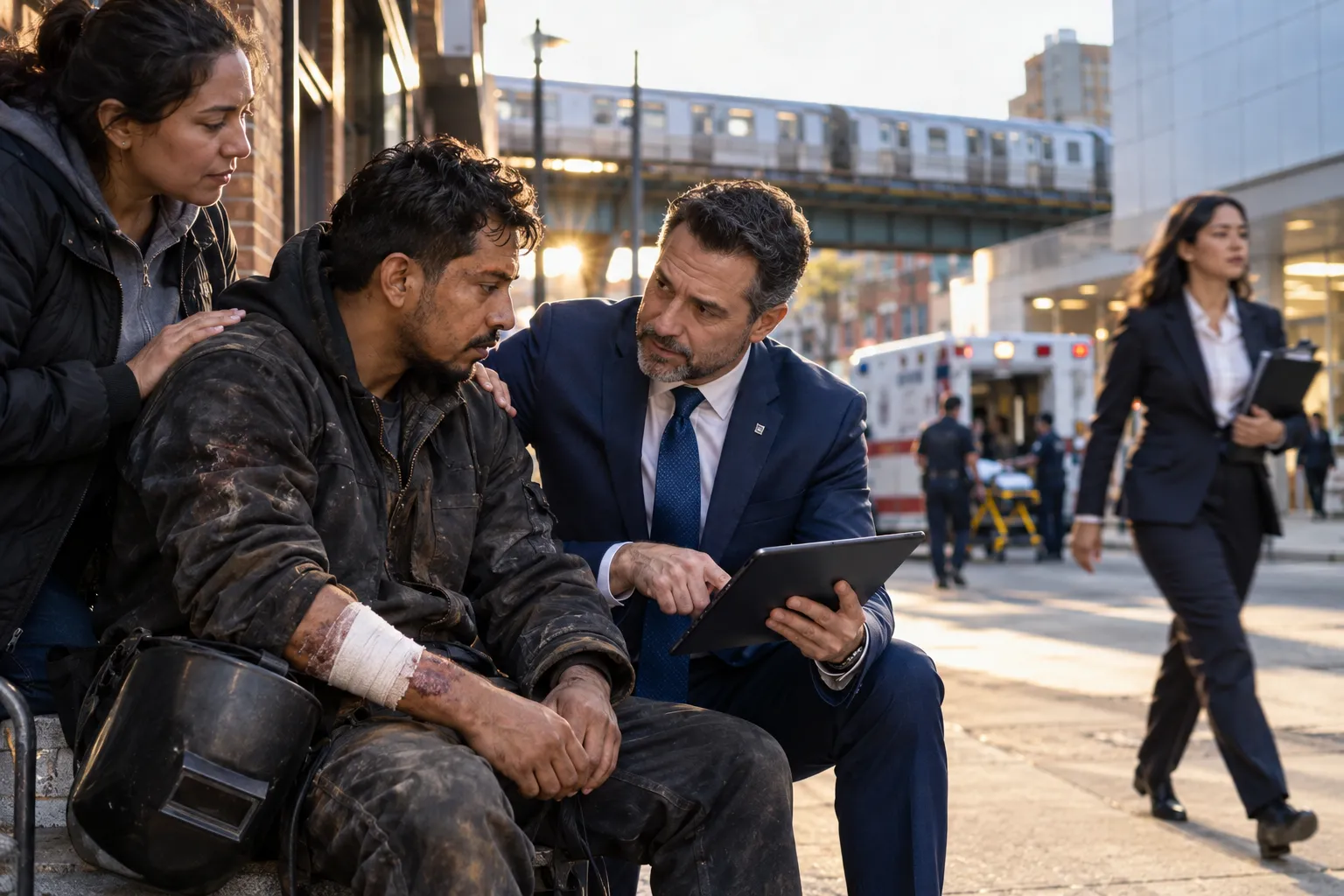
A Queens welder injured on the job may have a workers’ compensation claim and, in some cases, a separate lawsuit against a responsible third party. Workers’ compensation generally provides medical care and partial wage benefits without requiring proof that the employer caused the accident. A third-party case requires evidence of another party’s legal responsibility. Each route has different rules, available damages, and deadlines, so do not assume one claim excludes the other.
What Workers’ Compensation Benefits Cover for New York Welders
New York workers’ compensation can cover authorized medical treatment and partial wage replacement when a work injury prevents a worker from earning regular pay. Benefits depend on medical evidence, work capacity, and statutory limits. The system does not generally pay for pain and suffering. Report the injury and follow the claim process carefully. Keep records of treatment, missed shifts, and work restrictions to document the burn’s effects.
Can I Sue My Employer? Why Workers’ Comp Usually Is Your Only Claim Against Them
In most cases, workers’ compensation is an employee’s exclusive remedy against the employer for a workplace injury. An injured worker generally cannot bring an ordinary negligence lawsuit against the employer, even when unsafe conditions contributed to the accident. Exceptions are narrow and fact-specific. Do not assume that filing for benefits gives up every legal right. A welding accident burn injury attorney Queens workers consult can examine whether a separate claim against another responsible party exists.
When a Third-Party Lawsuit Is Possible: Defective Equipment, Contractors, and Property Owners
A third-party lawsuit may be available if someone other than the employer contributed to the injury. Potentially responsible parties can include a manufacturer of defective welding equipment, a subcontractor that created a dangerous condition, or a property owner with a legal duty to maintain the site. Evidence may include equipment inspection records, work orders, photographs, witness accounts, and safety procedures. The precise facts determine whether a claim can proceed.
Side-by-Side Comparison: What Each Claim Actually Pays
Workers’ compensation focuses on medical care and lost earning capacity, while a third-party lawsuit can seek damages not available through comp if liability and injury are proven. A lawsuit does not guarantee payment; any recovery depends on the evidence and applicable law.
| Claim type | Potential recovery | Key issue |
|---|---|---|
| Workers’ compensation | Covered medical care and partial wage benefits | Work-related injury and supporting medical records |
| Third-party lawsuit | Potential damages for pain, suffering, lost income, and other proven losses | Evidence that another party’s conduct or product caused harm |
How New York Labor Law Sections 200, 240, and 241 Protect Injured Welders
New York Labor Law Section 200 addresses safe work conditions and may apply when an owner or contractor had control or notice of a hazard. Section 241(6) requires owners and contractors to follow specific Industrial Code safety rules at covered construction sites. Section 240(1) concerns certain elevation-related risks, such as falls or falling objects, and does not cover every burn accident. The facts and applicable code provisions matter. Queens Construction Injury Attorneys & Accident Lawyers are provided by Silberstein & Miklos, P.C., whose attorneys handle construction injury claims and workers’ compensation in NYC. The firm has earned the highest possible rating from Martindale-Hubbell. For a free consultation, call 1-877-ASK4SAM. Queens Construction Injury Attorneys & Accident Lawyers can help injured workers understand which claims may fit their circumstances.
What Should You Do After a Welding Burn Injury? A Step-by-Step Action Plan
After a welding burn, get medical care, report the incident, and preserve evidence as soon as you can. These steps protect your health and help establish how the injury happened. If you are looking for a welding accident burn injury attorney Queens workers can consult, organize the basic facts first, but do not delay urgent treatment or reporting while gathering documents.
- Get medical care promptly and follow the treatment plan.
- Notify the employer and preserve evidence from the worksite.
- Record your symptoms, witnesses, and financial losses.
- Get legal advice before signing an insurance release or settlement.
Get Medical Care Immediately and Follow Every Doctor’s Order
Ask for emergency help for a severe burn, suspected electrical injury, breathing trouble, or eye pain after arc exposure. For other injuries, arrange prompt medical evaluation. Tell the clinician what happened, including the welding process, materials, chemicals, protective gear, and when symptoms began. This information can guide treatment and create a medical record connecting the injury to the incident.
Keep every appointment and follow instructions for wound care, medication, and work restrictions. Tell your provider if pain, redness, swelling, vision problems, or breathing symptoms change. A gap in care can make treatment harder and leave questions about the injury’s course. Ask for copies of visit summaries and restrictions, then store them with your claim records.
Report the Injury and Preserve Evidence Before It Disappears
Tell your supervisor or employer promptly, and make the report in writing if possible. State the date, time, location, task, equipment involved, and immediate symptoms. Keep a copy or note when and to whom you reported the injury. Do not guess about a cause; describe what you observed, such as a damaged cable, missing guard, unexpected ignition, or unsafe work area.
Worksites change quickly. If it is safe and allowed, preserve photographs of the equipment, work area, warning labels, and visible hazards. Record the names of contractors, supervisors, and coworkers who saw the event or its aftermath. Do not handle damaged equipment or return to a dangerous area to gather proof. The Queens Construction Injury Attorneys & Accident Lawyers are provided by Silberstein & Miklos, P.C. and offer legal support to injured construction workers.
Document Everything: Photos, Witnesses, and Medical Records
Take dated photos of visible burns as they heal, if your condition permits. Keep medical bills, pharmacy receipts, appointment records, wage statements, and messages about missed work or modified duties. Write down pain, sleep problems, and limits on daily tasks while details remain clear. These records can show the injury’s progression and its effect on your work and routine.
Ask witnesses for their names and contact information, and write down what each person observed in their own words. To prove negligence in a third-party case, evidence must connect a party’s conduct, equipment, or safety failure to the incident and your injury. A welding accident burn injury attorney can review records, identify evidence to preserve, and assess potential responsibility.
Do Not Sign Anything From the Insurance Company Yet
An insurer or employer representative may request a recorded statement, broad medical authorization, or settlement paperwork. Read each document carefully and do not sign a release before you understand what rights it affects. A quick payment may not account for ongoing treatment or disputed facts. Ask for a copy of every form and time to review it with counsel.
Silberstein & Miklos, P.C. has served the Queens area for two decades. For a free consultation, call 1-877-ASK4SAM and ask about Queens Construction Injury Attorneys & Accident Lawyers. Se habla Español.
The Long-Term Cost of Burn Injuries: Scarring, Disfigurement, and Lost Wages
Burn injuries can require ongoing wound care, surgery, rehabilitation, and time away from work. The full impact may not be clear in the first days after an accident. A settlement made before doctors understand the likely course of treatment can leave future expenses and reduced earning ability unaddressed. Before agreeing to resolve a claim, consider how the injury affects your health, appearance, work, and daily activities over time.
Why Burn Injuries Cost More Than Other Workplace Injuries
A serious burn can involve repeated medical appointments, specialized treatment, and procedures to repair damaged tissue. A worker may also need time to regain strength or adjust to lasting limits on movement. Costs extend beyond medical bills: missed shifts, reduced hours, and a change in the kind of work a person can perform can affect household income. Keep records of treatment, work restrictions, missed time, and expenses so the full effect can be evaluated.
Compensation for Scarring and Disfigurement Under New York Law
A third-party injury lawsuit may seek compensation for pain and suffering, including the effects of lasting scars or disfigurement, if the evidence establishes another party’s legal responsibility. The location, size, and permanence of a scar, along with its effect on movement or daily life, can matter. Medical opinions and photographs taken during healing may help document those changes. Workers’ compensation follows a separate system and generally does not pay pain-and-suffering damages.
The Hidden Toll: Psychological Trauma and Time Away From Work
Recovery can affect sleep, confidence, relationships, and a worker’s ability to return to a familiar job. A person who avoids certain tasks or experiences distress around welding equipment should tell a qualified health professional. Document treatment and work limitations alongside physical symptoms. If an insurer presses for a quick settlement, do not accept before the likely medical needs and wage losses are understood.
Protect your future recovery: Do not treat an early payment offer as a complete measure of a burn injury’s cost. Ask a qualified attorney to review the proposed release and the evidence of future care, scarring, and lost earning capacity before you sign.
How Long Do You Have to File a Claim and Why You Need a Queens Welding Accident Burn Injury Attorney
Deadlines depend on the claim and the parties involved. In New York, a personal injury lawsuit generally has a three-year deadline under CPLR 214(5), while workers’ compensation has separate notice and filing rules. A shorter deadline can apply to claims involving a public entity. A welding accident burn injury attorney Queens workers consult can identify the deadlines that apply before evidence or legal rights are lost.
New York’s Deadlines: Statutes of Limitations and Workers’ Comp Time Limits
A statute of limitations is the legal deadline for filing a lawsuit. For many personal injury cases, CPLR 214(5) sets a three-year period, but exceptions and shorter rules can apply. Under New York workers’ compensation law, an injured worker generally must notify the employer within 30 days and file a claim within two years. Do not rely on those general periods without checking your situation. Public entity claims can require a notice of claim within 90 days, under separate rules.
What Our Decades of Trial Experience Bring to Your Case
Building a case requires more than describing the burn. Our attorneys examine medical records, worksite conditions, equipment, contracts, and the roles of contractors or property owners. Silberstein & Miklos, P.C. has served Queens for two decades, and the firm has earned the highest possible rating from Martindale-Hubbell. The Queens Construction Injury Attorneys & Accident Lawyers are provided by Silberstein & Miklos, P.C. and handle construction injury claims and workers’ compensation in NYC.
New York Workers’ Compensation Law Section 120 prohibits an employer from penalizing an employee for filing or attempting to file a compensation claim. If you fear retaliation, document what occurs and discuss it with an attorney. Representation can help you understand your options without making promises about a particular result.
Your Free Consultation: What Happens When You Call
During a free consultation, explain when and where the accident happened, what caused the burn, and what treatment you have received. Bring any records you have, but do not delay calling while you gather paperwork. The team can review potential deadlines, discuss available claim paths, and identify useful evidence. Queens Construction Injury Attorneys & Accident Lawyers offer legal support to help injured construction workers understand and pursue their claims.
Frequently Asked Questions
What are the most common burn injuries from welding accidents?
The most common welding burn injuries are thermal burns from hot metal, sparks, and flames, and flash burns to the eyes and skin from ultraviolet arc light. Electrical burns, chemical burns from flux and solvents, and fume exposure can also cause serious harm. Get a medical exam even if the injury seems minor, since damage may worsen over time.
What workers' compensation benefits are available for welders in New York?
New York workers’ compensation can cover authorized medical treatment and partial wage replacement when a welding injury prevents you from working. The system does not pay for pain and suffering. Report your injury promptly and keep records of treatment, missed shifts, and work restrictions. Call Silberstein & Miklos, P.C. for a free consultation to protect your rights.
How do I prove negligence in a welding accident case?
Proving negligence requires evidence that another party’s conduct or product caused your injury. Useful evidence includes equipment inspection records, work orders, photographs, witness accounts, and site safety procedures. Potentially responsible parties can include equipment manufacturers, subcontractors, or property owners. Our decades of trial experience help us identify and pursue every responsible party.
What is the statute of limitations for a welding accident lawsuit in New York?
Under CPLR 214, New York’s three-year deadline, you generally have three years from the date of a welding injury to file a personal injury lawsuit. Workers’ compensation claims carry their own strict deadlines. Do not wait, because investigation and evidence collection take time. Contact our team immediately to preserve your rights.
How do New York Labor Laws protect injured welders?
New York Labor Law Sections 200, 240, and 241 protect construction workers, including welders. Section 200 addresses safe work conditions, Section 241(6) requires owners and contractors to follow specific Industrial Code safety rules, and Section 240(1) addresses elevation-related hazards. These laws can create liability for owners and contractors beyond ordinary negligence claims.
What is the difference between a workers' comp claim and a third-party lawsuit for a welding burn?
Workers’ compensation covers medical care and partial wage benefits without proving anyone was at fault, but it does not pay for pain and suffering. A third-party lawsuit can seek damages for pain, suffering, and lost income if you prove another party caused the harm. One claim does not exclude the other, so have your case reviewed by an experienced attorney.
