


Blog

LIRR Train Station Trip and Fall Lawyer: Your Rights After a Fall at an MTA Station
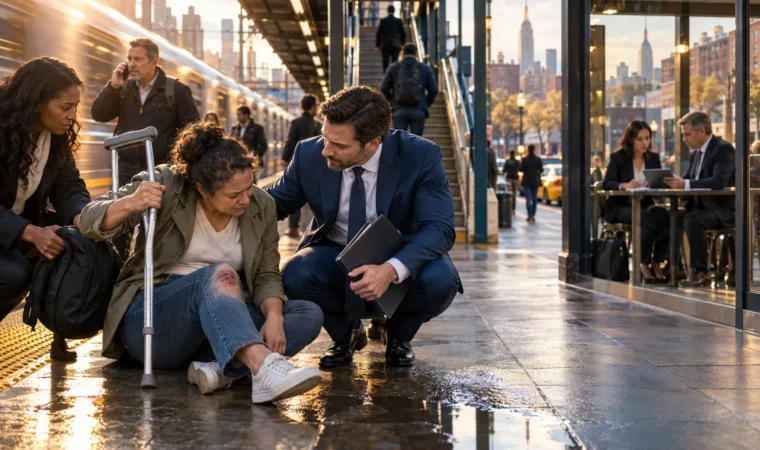
train station trip and fall lawyer LIRR
If you fell at an LIRR station, you may be able to sue the MTA or another responsible party. The first deadline can arrive quickly. A train station trip and fall lawyer LIRR riders consult can help identify the proper defendant and protect a claim while you focus on treatment.
Key Takeaways
- Injured LIRR passengers may have grounds to sue the MTA or another liable party, but strict notice requirements and shortened filing deadlines apply to claims against public entities.
- A qualified train station trip and fall attorney can pinpoint which defendant bears responsibility, whether that is the railroad, a maintenance contractor, or a property owner.
- Acting quickly matters because evidence such as surveillance footage and hazardous conditions can disappear in the days following your accident.
- Seeking immediate medical treatment both protects your health and creates documentation that strengthens your injury claim.
- An experienced lawyer can preserve your legal rights while you concentrate on recovering from your injuries.
A fall may leave you with medical bills, missed work, and questions about suing a public authority. Start by checking the notice deadline: waiting to identify who is responsible can put your rights at risk.
Can You Sue the LIRR or MTA for a Trip and Fall at a Train Station? Yes, But the Clock Starts Now
Yes. A passenger injured by a dangerous condition at an LIRR station may have a claim against the MTA, the LIRR, a contractor, or another party. The responsible party depends on who controlled the area and caused or failed to address the hazard. Claims against the MTA or LIRR generally require a notice of claim within 90 days of the injury. Seek legal advice promptly rather than waiting for a claim representative to confirm that the fall happened on railroad property.
The 90-Day Notice of Claim: The Deadline That Kills Most LIRR Fall Claims
A notice of claim is a formal document telling a public authority about your injury and the basis for your claim. In general, it must be served within 90 days after the accident. It is not a lawsuit, and submitting it does not resolve your case. Missing this deadline can seriously impair your ability to seek compensation. Have the incident date, station location, and basic facts reviewed promptly.
Can You Sue the MTA? Clearing Up the Government Confusion
A public authority is not automatically immune from a personal injury lawsuit. Claims involving the MTA and LIRR follow special rules, including a notice requirement and procedures for starting a lawsuit. The correct defendant may depend on the station area, maintenance responsibility, and circumstances of the fall. If a railroad claims department disputes that the incident happened on its property, station records, witness accounts, and other documentation may help establish where and how it occurred.
The 1-Year-and-90-Day Statute of Limitations: Your Final Filing Deadline
A lawsuit against the MTA generally must be filed within 1 year and 90 days of the accident. This deadline is separate from the 90-day notice of claim; meeting one does not replace the other. Special circumstances can affect deadlines and procedures, so do not rely on a general online answer to calculate your filing date. Silberstein & Miklos, P.C. has over 20 years of experience representing individuals injured in slip, trip, and fall accidents in New York City and Long Island. Its Slip and Fall Lawyer New York City service can help injured riders understand their options and act before a deadline passes.
Who Is Responsible for the Hazard That Made You Fall at an LIRR Station?

Responsibility depends on who owned, controlled, inspected, or maintained the place where you fell, and whether that party knew or should have known about the dangerous condition. A platform, stairway, entrance, or connecting walkway may involve more than one entity. Identifying responsible parties early matters because station-area responsibilities and records can differ. A train station trip and fall lawyer LIRR passengers contact can investigate those relationships rather than accept a denial at face value.
MTA and LIRR Duty to Maintain Platforms, Stairs, and Walkways
Property owners in New York City are required to maintain their property in a safe condition and may be liable for injuries caused by hazards they fail to correct. For a station fall, an investigation may examine who controlled the platform or passageway, whether inspections occurred, and whether a dangerous condition was reported or allowed to remain. Inspection logs, repair requests, incident reports, and witness statements may be relevant. The duty and responsible entity depend on the location and circumstances.
When Station Contractors and Cleaning Companies Share Fault
A contractor or cleaning company may share responsibility if its work created a hazard or it had a duty to address a condition and failed to do so. The station authority may also remain responsible, depending on its control, notice, and maintenance obligations. Service agreements, work schedules, cleaning logs, and records showing when the condition was discovered or corrected may help explain what happened. Claims involving several parties require review of who did the work and who retained responsibility for the area.
Passenger Claims vs. FELA Claims for LIRR Employees
An injured passenger generally brings a premises-liability or negligence claim under the rules that apply to the responsible party. A railroad employee injured while working may have a different route under the Federal Employers’ Liability Act, commonly called FELA. FELA is an employee-injury law, not the ordinary basis for a passenger’s station fall claim. If you were working for the railroad when injured, explain your job duties and how the accident occurred so counsel can assess the applicable process.
- Passenger: The claim may involve station maintenance, notice of a hazard, and the party controlling the area.
- Railroad employee: Work-related injury facts may raise FELA questions and different procedures.
- Contractor involvement: Maintenance or cleaning duties may create additional issues about fault and responsibility.
Silberstein & Miklos, P.C. has achieved numerous million and multimillion dollar verdicts and settlements. The firm’s Slip and Fall Lawyer New York City service can assess which parties may be accountable and explain next steps in plain language.
Common LIRR Station Hazards and the Injuries They Cause
Crowded stations can make hazards difficult to spot, especially when riders are hurrying to catch a train or changing platforms. LIRR stations include indoor concourses, stairs, platform edges, and outdoor walkways, each with different maintenance needs. The fall’s location and condition matter: a claim may depend on whether the hazard existed long enough to be discovered and addressed, and who controlled the area. A train station trip and fall lawyer LIRR riders contact can investigate the specific site rather than treat every station accident alike.
Known Hazards at Jamaica, Penn Station, Atlantic Terminal, and Outdoor Platforms
Major hubs such as Jamaica, Penn Station, and Atlantic Terminal have busy passageways, staircases, escalators, and platforms. Foot traffic can obscure a floor hazard or make an obstruction harder to avoid. Outdoor platforms and station approaches face exposure to rain, snow, ice, and changing temperatures. These are conditions to document, not a claim that any specific station area is unsafe. The precise spot, time, weather, passenger flow, and nearby warning signs can help explain how the fall happened.
Common Causes: Platform Gaps, Broken Edges, Ice, and Poor Lighting
Station falls may involve a raised or uneven surface, broken platform edge, unexpected gap, loose flooring, water, or ice. Dim lighting can make a change in elevation or an obstruction harder to see, and spills or tracked-in moisture can make a walking surface slick. Photograph the condition as it appeared, including its position relative to platform markings, stairs, doors, or fixed features. Preserve the shoes and clothing you wore; they may show contact with water, dirt, or debris.
Injuries We See From Platform Trip and Fall Accidents
A fall can cause a sprain, fracture, soft-tissue injury, spinal injury, head trauma, or facial injury, not just a bruise. Pain and other symptoms may develop or worsen after the initial shock, so seek medical care. Describe how you landed and every symptom you notice. Keep discharge papers, test results, treatment instructions, and records of missed work. The Slip and Fall Lawyer New York City service can help injured riders understand how evidence of the hazard and medical effects may support a claim.
Your First 72 Hours After a Fall at an LIRR Station: Step-by-Step Checklist
The first three days after a station fall are a good time to record what happened and preserve evidence. Focus on your health, then write down details while your memory is fresh. Station conditions can change, surveillance footage may not be retained indefinitely, and a formal report does not replace a required notice of claim. These steps can help organize information for a lawyer and preserve the incident record.
Step 1: Report the Fall to MTA Police and Get the Incident Number
Tell station personnel or MTA Police that you fell, and ask for an incident or report number. Record the date, approximate time, station, platform or entrance, and a clear description of the spot. Get witnesses’ names and contact information if possible. A station report creates a record but does not satisfy the separate notice-of-claim procedure. Keep any paperwork and note whom you spoke with.
Step 2: Photograph the Hazard Before It Gets Fixed
If it is safe, photograph the condition from several angles. Include a wide view showing the location and close views of the surface, obstruction, lighting, or water. Capture nearby signs, platform markings, and landmarks that identify the area. Do not endanger yourself or others to take pictures. Preserve the original image files, and keep the shoes or clothing worn during the fall without cleaning or altering them.
Step 3: See a Doctor and Build the Medical Record
Get prompt medical attention, even if you are unsure how serious the injury is. Tell the provider that you fell at an LIRR station, explain how you landed, and report all symptoms. Follow the care plan and keep visit summaries, imaging results, prescriptions, and receipts. Record pain, mobility limits, follow-up appointments, and time missed from work. Accurate medical documentation connects the accident to your treatment.
What Evidence Wins These Cases: Proving Negligence Against the MTA
A strong claim needs evidence showing what caused the fall and why the responsible party may be at fault. Relevant proof can include:
- Photographs or video showing the hazard and its precise location.
- Witness names and statements describing the condition and fall.
- Incident reports, maintenance logs, inspection records, and repair requests.
- Available station surveillance footage and records identifying who controlled the area.
- Medical records documenting the injury, treatment, and recovery.
Preserve what you have and ask counsel promptly about requesting station records or footage. The Slip and Fall Lawyer New York City team at Silberstein & Miklos, P.C. can review available evidence and explain how to protect a potential claim. A train station trip and fall lawyer LIRR passengers consult can assess whether the facts support notice of a dangerous condition and identify evidence that needs prompt preservation.
What Your LIRR Trip and Fall Case Is Worth: How to Get Started Today

The value of a station fall claim depends on the injuries, their effect on your ability to work and manage daily activities, and the evidence establishing responsibility. There is no reliable dollar amount without reviewing the facts and medical record. Silberstein & Miklos, P.C. has achieved numerous million and multimillion dollar verdicts and settlements, but past results do not predict what an individual case will recover. A careful evaluation should account for current losses and any treatment or limitations that may continue.
Damages You Can Recover: Medical Bills, Lost Wages, and Pain and Suffering
Depending on the evidence and applicable law, a claim may seek compensation for financial losses and the personal impact of an injury. Keep bills, pay records, and documentation of effects on ordinary activities. New York follows a pure comparative fault system, so compensation may be reduced in proportion to an injured person’s share of fault. That does not automatically prevent recovery. A lawyer can assess how the evidence relates to losses and any arguments about responsibility.
- Medical expenses: Treatment costs already incurred and supported by records.
- Lost income: Wages missed during recovery, supported by employment and pay documentation.
- Pain and suffering: The physical discomfort and limits on daily life associated with the injury.
Myth Busted: “The Railroad Told Me I Can’t Sue”
A statement from a railroad representative or claims department does not decide whether you have a valid claim. Your options depend on the facts, applicable deadlines, and evidence. If a representative disputes that the fall occurred on railroad property or says the railroad is not responsible, preserve the correspondence and do not treat the response as a final legal ruling. Silberstein & Miklos, P.C. investigates accident circumstances, consults experts when appropriate, handles claim paperwork, and works to hold responsible parties and insurers accountable.
Why Riders Across Long Island and Queens Trust Silberstein & Miklos: Free Consultation, No Fee Unless We Win
Silberstein & Miklos, P.C. has over 20 years of experience representing individuals injured in slip, trip, and fall accidents in New York City and Long Island. The firm’s attorneys are recognized by peer-review organizations, including Martindale-Hubbell, Best Lawyers in America, and Super Lawyers. A Slip and Fall Lawyer New York City consultation can help you understand the potential value of your losses and the steps ahead. The firm offers free consultations and works on a contingency fee basis, meaning you pay attorney fees only if the firm obtains money for you.
For help evaluating a station fall claim, contact the firm’s Slip and Fall Lawyer New York City service. A train station trip and fall lawyer LIRR riders consult can review the facts and explain a practical path forward.
Frequently Asked Questions
Can I sue the LIRR or MTA if I tripped and fell at a train station?
Yes, you may be able to sue the MTA, the LIRR, a contractor, or another responsible party if a dangerous condition at an LIRR station caused your fall. The correct defendant depends on who controlled the area and failed to address or correct the hazard.
How long do I have to file a claim after falling at an LIRR station?
You generally must serve a notice of claim against the MTA or LIRR within 90 days of your injury. A lawsuit against the MTA must then typically be filed within 1 year and 90 days of the accident, and these deadlines are separate from each other.
What is a notice of claim and why is the 90-day deadline so important?
A notice of claim is a formal document that tells a public authority about your injury and the basis for your claim. It is not a lawsuit, and missing the 90-day deadline can seriously impair your ability to seek compensation. Reporting the fall at the station does not necessarily satisfy this formal requirement.
Who is legally responsible for maintaining LIRR platforms and stations?
Responsibility depends on who owned, controlled, inspected, or maintained the area where you fell, and whether that party knew or should have known about the dangerous condition. A contractor or cleaning company may also share fault if its work created the hazard or it failed to address a condition it had a duty to correct.
What evidence do I need to prove my LIRR trip and fall claim?
Useful evidence includes incident reports, inspection logs, repair requests, cleaning records, photographs of the hazard, and witness statements. Station records and documentation can also help establish where the fall occurred if the railroad claims department disputes the location.
Is the MTA immune from personal injury lawsuits because it is a government agency?
No, a public authority like the MTA is not automatically immune from a personal injury lawsuit. Claims against the MTA and LIRR follow special rules, including the notice of claim requirement and specific procedures for starting a lawsuit.
Do LIRR employees and passengers file the same type of claim after an accident?
No, injured passengers generally bring a premises-liability or negligence claim, while railroad employees injured on the job may have a claim under the Federal Employers’ Liability Act, known as FELA. FELA applies to workers, not to passengers who fall at a station.
