


Blog

Tunnel Construction Injury Attorney NY: Protecting Sandhogs and Tunnel Workers
tunnel construction injury attorney NY
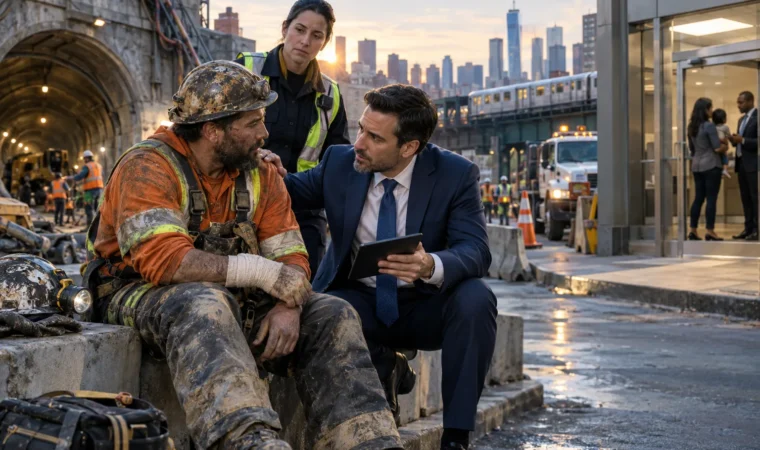
A tunnel construction injury can leave you with serious medical needs, lost income, and pressure to return to work before you are ready. A tunnel construction injury attorney NY workers consult can assess the incident, identify potential claims, and help protect evidence while you focus on treatment. Your options depend on how the injury happened, who controlled the work, and which parties may have failed to meet their safety duties.
Key Takeaways
- Tunnel work injuries often support claims beyond workers’ compensation, including third-party lawsuits against contractors, equipment makers, or property owners who failed to uphold safety obligations.
- An experienced attorney can preserve critical evidence, such as site conditions and equipment records, before changes at the jobsite weaken your case.
- Your right to compensation depends heavily on who controlled the work and whether safety duties were violated by parties other than your direct employer.
- Seeking legal guidance early allows you to prioritize medical treatment while your attorney builds a claim for lost income and future care.
New York tunnel projects involve specialized crews, heavy equipment, unstable ground, and hazards that can be difficult to see or escape. Those conditions may help explain whether a safety failure contributed to an injury.
Tunnel Construction Injuries in New York: Your Legal Rights Start Here
After a tunnel construction injury, seek medical care and report the incident to your employer. Workers may have a workers’ compensation claim, and some may also have a separate claim against a responsible third party. An unsafe excavation, defective machine, or failure to protect workers from a known hazard may point to liability beyond the employer. A lawyer familiar with New York construction cases can investigate site conditions, project roles, and applicable safety requirements.
Who Are Sandhogs? The Workers Who Build NYC’s Tunnels
“Sandhog” is the traditional name for workers who build and maintain tunnels and other underground infrastructure. Their work includes excavation, drilling, operating tunnel-boring machines, installing supports, handling concrete, and maintaining utilities. Crews may work beneath streets, waterways, or active transportation routes, often in confined spaces with limited access to the surface. Training and experience do not eliminate risks from unstable ground, poor air quality, inadequate protections, or unsafe equipment.
The Most Common Tunnel Construction Injuries
Tunnel incidents can cause severe, lasting harm. Shifting soil, rock, equipment, or materials may cause crush injuries; electrical faults, hot work, or fires can cause burns. Falls and falling objects can lead to fractures or traumatic brain injuries. Dust, fumes, and other hazardous substances can damage the lungs, while repeated machinery noise may contribute to hearing loss. A collapse or equipment failure can cause multiple injuries at once, including spinal trauma and internal injuries.
- Ground failure: burial, compression injuries, fractures, or fatal trauma.
- Machinery and material strikes: crush injuries, amputations, and head injuries.
- Air and noise hazards: breathing problems, toxic exposure, and hearing damage.
- Fire and electrical incidents: burns, shock, or secondary injuries during evacuation.
Why Tunnel Work Is More Dangerous Than Surface Construction
Underground crews may have little room to move, limited visibility, and few ways to leave quickly during an emergency. Soil pressure, groundwater, ventilation, and nearby utilities can change the hazards as excavation advances. A problem visible on an open site may remain hidden until ground gives way or contaminated air builds up.
What Causes Tunnel Construction Accidents in New York?
Cave-Ins, Collapses, and Ground Failure
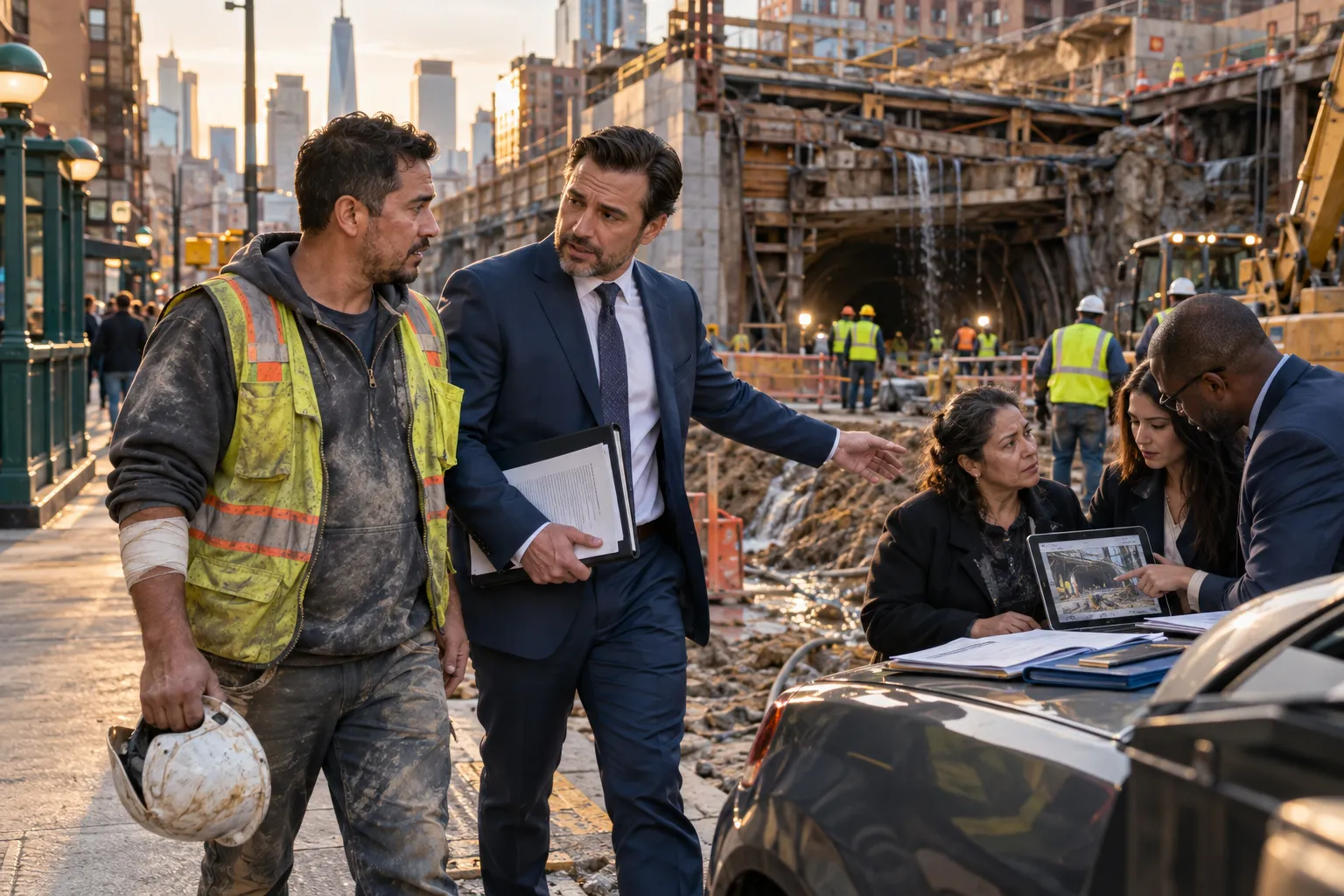
Excavation can destabilize soil and rock. Water intrusion, inadequate shoring, or changing ground conditions may raise the risk of collapse, burying or pinning workers when a tunnel face, trench, or support structure fails. Investigators may review excavation plans, ground assessments, support installation, inspection records, and warnings about changing conditions. A failure to plan for foreseeable ground movement may help show whether a contractor or another responsible party acted negligently.
Ventilation Failures and Toxic Air Underground
Underground work depends on adequate airflow to control fumes, dust, heat, and other contaminants. Diesel equipment, welding, blasting, and chemical products can introduce hazards; a ventilation breakdown may let dangerous substances accumulate. Oxygen deficiency and toxic exposure can impair judgment or cause workers to collapse before reaching an exit. Air-monitoring results, ventilation maintenance records, equipment logs, alarms, and evacuation orders may provide relevant evidence.
Heavy Machinery, Explosions, and Falling Loads
Tunnel-boring machines, haul trucks, conveyors, hoists, and cranes operate in close quarters, where a blind spot or communication failure can cause severe harm. Unsecured loads may fall, while defective equipment or unsafe maintenance can create crushing or entanglement hazards. Blasting and other explosive work require planning, warnings, and access controls. Investigators should identify who supplied, maintained, inspected, and operated the equipment, and who directed the work.
OSHA Safety Rules for Tunnel Construction (29 CFR Part 1926, Subpart S)
Requirements vary with the work and conditions. A possible violation may help explain how a hazard developed, but does not by itself decide a New York injury claim. Inspection, training, air-testing, safety-plan, and corrective-action records may show what responsible parties knew and how they responded.
As an AV-rated firm with decades of courtroom experience, Silberstein & Miklos, P.C. examines worksite facts rather than relying on a generic incident report. If you are looking for a tunnel construction injury attorney NY workers can turn to for a case review, the Manhattan NYC Construction Injury Accident Lawyer resource describes the firm’s construction injury practice. Ask4Sam for guidance about next steps.
Workers’ Compensation vs. a Third-Party Lawsuit: Which Path Pays You More?
Workers’ compensation and a personal injury lawsuit are different paths after an underground construction injury. Workers’ compensation can provide medical benefits and partial wage replacement without proof that the employer caused the accident. A separate lawsuit may seek damages workers’ compensation does not cover, but requires evidence that a legally responsible third party contributed to the harm. Both claims may proceed, depending on the facts. A tunnel construction injury attorney NY workers consult can examine the project structure and potential claims.
Can I Sue My Employer for a Tunnel Injury in New York?
Workers’ compensation is usually the exclusive remedy against an employer for an accidental workplace injury. An injured employee generally cannot sue the employer for ordinary negligence, even if an unsafe condition contributed to the incident. Narrow exceptions may apply. A workers’ compensation claim does not end the investigation: a general contractor, subcontractor, equipment manufacturer, or property owner may have separate responsibility.
What New York Labor Law Sections 200, 240, and 241(6) Mean for Tunnel Workers
New York Labor Law Section 200 addresses safe-work conditions and may apply when an owner or contractor created a hazard or had authority over the work and notice of the unsafe condition. Section 241(6) can impose duties on owners and contractors for covered construction, excavation, or demolition work when a specific Industrial Code requirement was violated. Section 240(1) concerns certain elevation-related risks, such as falling objects or workers falling from a height. Its application to tunnel work depends on the task and hazard; it does not cover every underground accident. A lawyer must match the evidence to the statute and applicable safety rules.
Workers’ Comp vs. Personal Injury Lawsuit: A Side-by-Side Comparison
These claims differ in who pays, what must be proven, and what losses may be recovered. Workers’ compensation does not require proof of fault; a third-party case generally requires evidence of negligence or another recognized legal violation. Both paths may be pursued, with benefits and settlement issues coordinated.
| Issue | Workers’ compensation | Third-party lawsuit |
|---|---|---|
| Who may be responsible | Employer’s insurance carrier | A legally responsible party other than the employer |
| What must be shown | Work-related injury and eligibility for benefits | Evidence connecting another party’s conduct or product to the injury |
| Potential recovery | Medical care and partial wage benefits under the system | Potential damages for losses such as pain and suffering, subject to proof |
Who Can Be Held Liable: General Contractors, Subcontractors, Equipment Makers, and Property Owners
Responsibility depends on who controlled the work, created or knew about a dangerous condition, and had a duty to address it. A general contractor or subcontractor may face a claim involving site coordination, supervision, or unsafe methods. A property owner may have duties under applicable law, and an equipment maker may be responsible if a defect contributed to the event. Contracts, inspection logs, work orders, and testimony can help establish each party’s role.
What to Do After a Tunnel Construction Injury: A Step-by-Step Checklist
Promptly document medical care, written notice, and available evidence. If pain, medication, or hospitalization prevents you from handling these tasks, ask someone you trust to help and keep copies of records. Do not sign a release or give an insurer a recorded statement before you understand the document and questions.
Get Medical Care and Report the Injury in Writing
Tell medical providers the injury happened at work and describe how it occurred, including the equipment, task, and symptoms. Follow treatment instructions and keep appointment records. Notify your employer promptly in writing, even if a supervisor knows about the incident. Include the date, location, and a factual account, and save proof of delivery.
Preserve Evidence and Work With Your Union Representative
Record what you remember before details fade. If safe and permitted, photograph the area, machinery, protective equipment, and visible injuries. Keep incident reports, schedules, messages, pay records, and medical paperwork. Ask witnesses to preserve their recollections. A union representative may explain reporting procedures, document workplace communications, or identify applicable safety agreements.
Deadlines to File: New York’s Statute of Limitations Explained
For workers’ compensation, give written notice to the employer as soon as possible, generally within 30 days, and file a claim within two years of the accident. A New York personal injury lawsuit generally has a three-year filing limit, though exceptions can change the deadline. Claims involving a public entity may require a notice of claim within 90 days and have shorter suit deadlines. Have counsel confirm each deadline promptly rather than relying on the longest possible period.
Can I Be Fired for Filing a Claim? Your Anti-Retaliation Rights
New York law prohibits an employer from retaliating against a worker for pursuing workers’ compensation benefits. If your hours, duties, or employment status change after you report an injury, preserve schedules, messages, and written explanations. Raise retaliation concerns promptly with a union representative or attorney, who can assess the facts and available remedies.
How to Choose the Right Tunnel Construction Injury Attorney in NY
Ask whether the lawyer has handled serious construction injury cases, understands New York Labor Law, and can investigate contractors, equipment, and site records. Confirm who will communicate with you, how fees work, and whether the firm can pursue workers’ compensation and third-party claims together. Silberstein & Miklos, P.C. is an AV-rated firm with decades of courtroom experience. Learn about the Manhattan NYC Construction Injury Accident Lawyer and discuss whether the firm’s approach fits your situation. Ask4Sam for a free consultation before signing away rights or accepting a settlement.
What Is a Tunnel Injury Case Worth? Case Example and FAQ
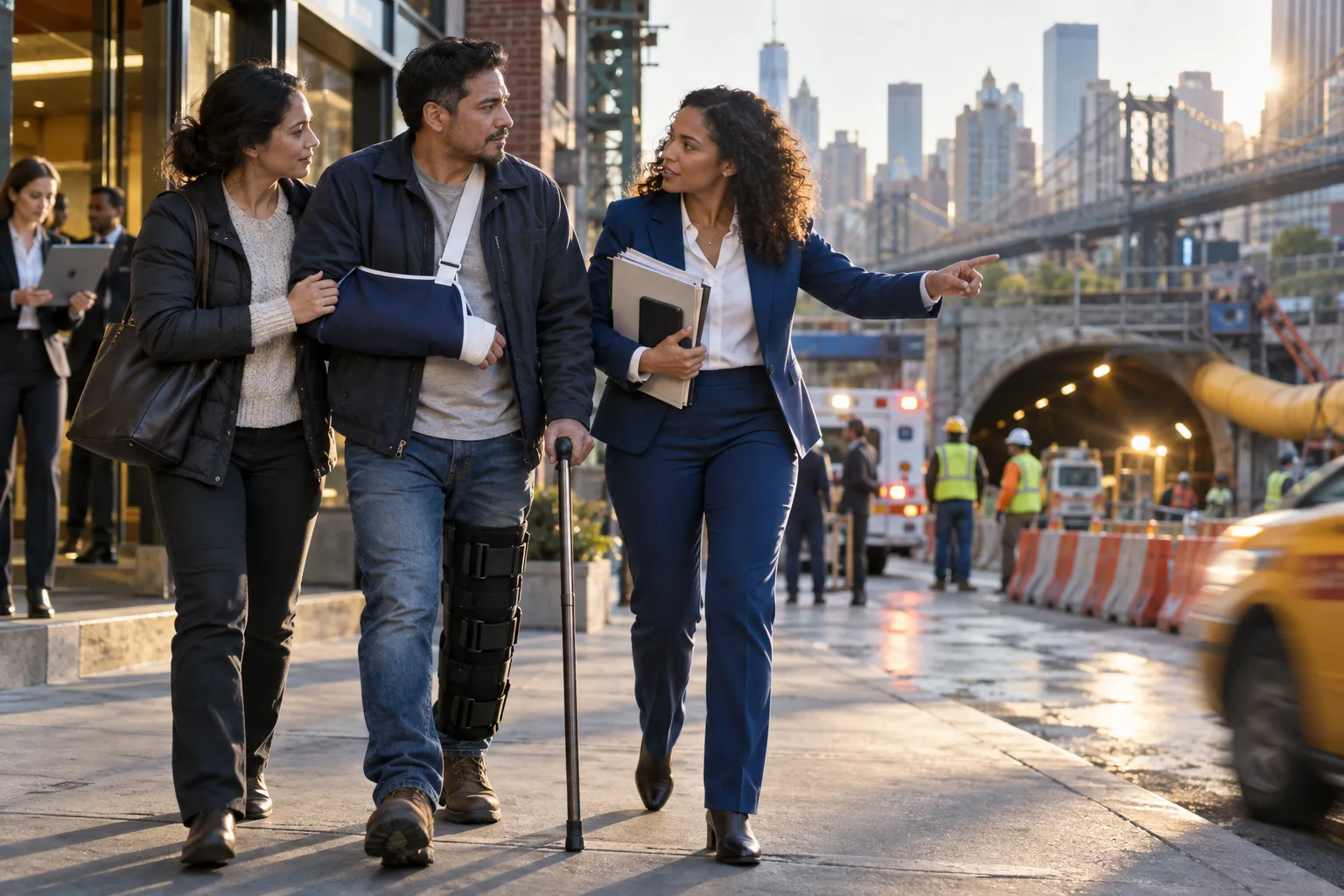
No fixed settlement amount applies to a tunnel injury. Potential recovery depends on the evidence, severity and duration of the harm, and which parties may be legally responsible. An experienced tunnel construction injury attorney NY workers can consult will assess documented losses and investigate any third-party claim. Consider whether an offer accounts for future treatment, reduced earning capacity, and the injury’s full impact, not just its headline amount.
Case Example: How a Third-Party Claim Can Change the Outcome
Illustrative example: A sandhog is injured when tunnel equipment malfunctions during a shift. Workers’ compensation may cover eligible medical care and wage benefits. An investigation might also examine whether a contractor’s maintenance practices or a product defect contributed to the failure. If evidence supports a claim against a responsible third party, that case may seek damages unavailable through workers’ compensation, including pain and suffering. This example is not a prediction or guarantee. The outcome depends on proof, liability, applicable law, and the worker’s losses.
Factors That Determine Your Case Value
Case value may depend on medical records, permanent impairment, time away from work, lost future earnings, and continuing care needs. Liability evidence also matters: inspection and maintenance logs, safety plans, contracts, witness accounts, and equipment records may help show how the incident occurred and who was responsible. Insurers may challenge the cause or seriousness of an injury. Do not accept a final settlement before your diagnosis and likely treatment needs are understood; a release may prevent you from seeking more compensation later.
Frequently Asked Questions From Tunnel Workers and Their Families
What injuries are common? Tunnel incidents can cause crush injuries, fractures, burns, head trauma, breathing injuries, and hearing damage.
Who may be liable? Depending on the evidence, a general contractor, subcontractor, property owner, or equipment manufacturer may bear responsibility.
Can I sue my employer? Workers’ compensation is generally the exclusive remedy against an employer for an accidental work injury. A separate claim may be possible against a responsible third party.
How do the claim types differ? Workers’ compensation provides eligible benefits without proving fault. A personal injury lawsuit requires proof of a third party’s legal responsibility and may seek different damages.
How long do I have to file? Many New York personal injury lawsuits have a three-year deadline, but exceptions apply, including shorter notice requirements for some public-entity claims. Get advice promptly to confirm your deadline.
Talk to an AV-Rated NY Tunnel Injury Attorney Today, Free Consultation
Before accepting an insurer’s offer or signing a release, have the evidence and potential claims reviewed. Silberstein & Miklos, P.C. brings decades of courtroom experience and an AV rating to serious construction injury cases. Learn about the Manhattan NYC Construction Injury Accident Lawyer and request a free consultation. Call ASK4SAM to discuss your situation with our team.
Frequently Asked Questions
What are the most common injuries in tunnel construction?
The most common tunnel construction injuries include crush injuries from shifting soil and machinery, burns from fires and electrical faults, fractures and traumatic brain injuries from falls or falling objects, hearing loss from equipment noise, and lung damage from dust and toxic fumes. Because tunnels are confined spaces, a single collapse or equipment failure can cause multiple serious injuries at once.
Who is liable for a tunnel construction injury in New York?
Liability for a tunnel construction injury in New York depends on how the injury happened and who controlled the work. While workers’ compensation may cover the claim against the employer, a general contractor, property owner, equipment supplier, or maintenance company may also be liable if inadequate shoring, defective machinery, ventilation failures, or known safety hazards contributed to the incident.
Can I sue my employer for a tunnel construction injury?
In most cases, a tunnel construction worker cannot sue their employer directly because workers’ compensation is an insurance claim, not a lawsuit. But, if a third party such as a contractor, equipment manufacturer, or property owner failed to meet safety duties, the injured worker may bring a separate personal injury claim against that party in addition to collecting workers’ compensation benefits.
What is the difference between workers' compensation and a personal injury lawsuit for tunnel workers?
Workers’ compensation is a no-fault insurance claim that covers medical care and a portion of lost wages, but it does not compensate for pain and suffering. A personal injury lawsuit against a negligent third party can recover broader damages, including full lost income, pain and suffering, and future medical needs. Many tunnel construction injury claims involve both routes.
How long do I have to file a tunnel construction injury lawsuit in New York?
In New York, the general statute of limitations for a personal injury lawsuit is three years from the date of the tunnel construction injury. Certain claims involving public entities require a notice of claim in as little as 90 days. Consulting a tunnel construction injury attorney early helps preserve evidence and protect your filing deadlines.
What should I do after a tunnel construction injury in New York?
Seek medical care immediately and report the incident to your employer as soon as possible. Preserve details about the task, equipment, site conditions, and the people directing the work, because a tunnel injury does not automatically establish who is responsible. A tunnel construction injury attorney can then investigate site conditions and identify all potential claims.
What safety rules apply to tunnel construction in New York?
Requirements vary with the work and site conditions. Records of inspections, air testing, training, and corrective actions can show whether responsible parties knew about a hazard and how they responded.
